
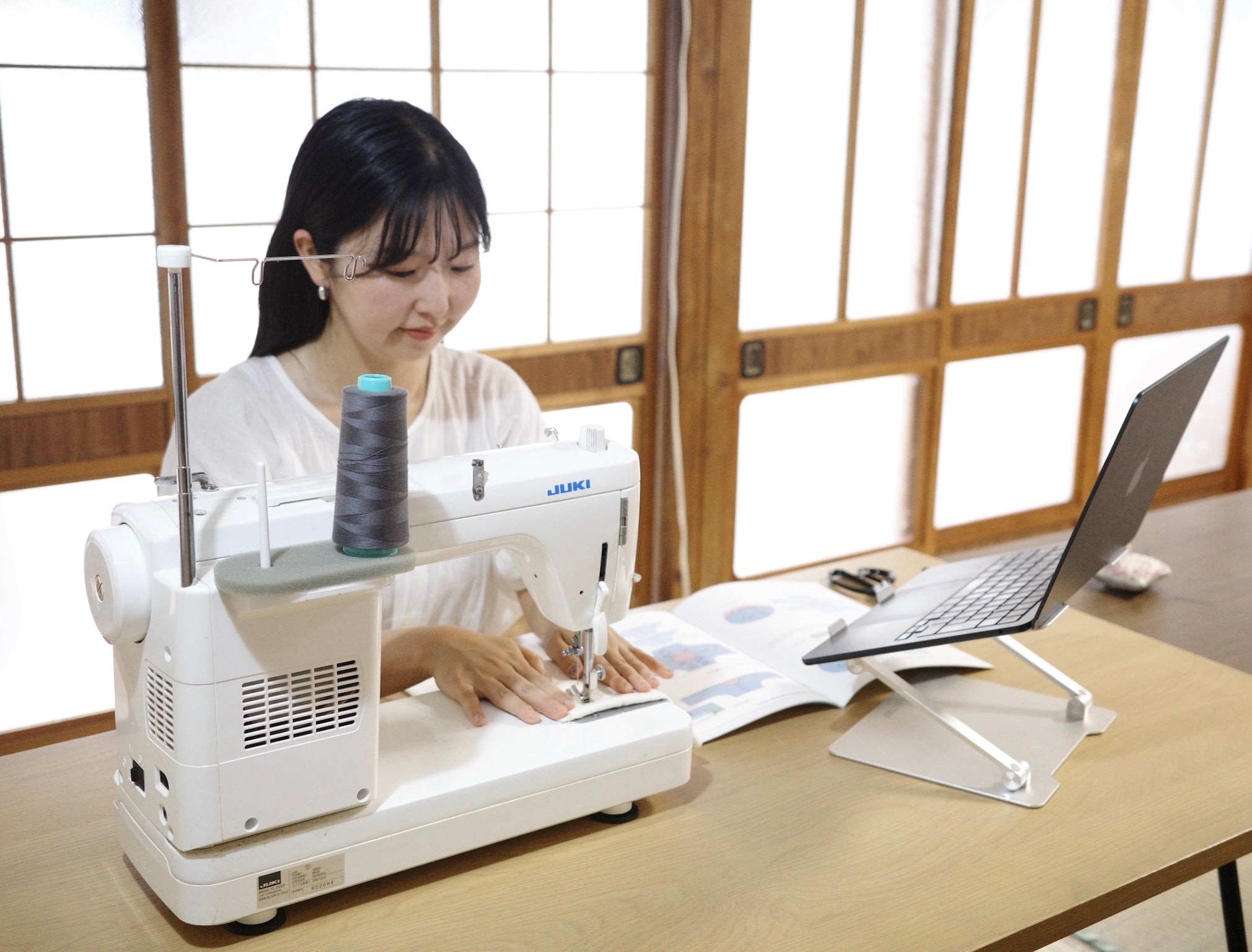
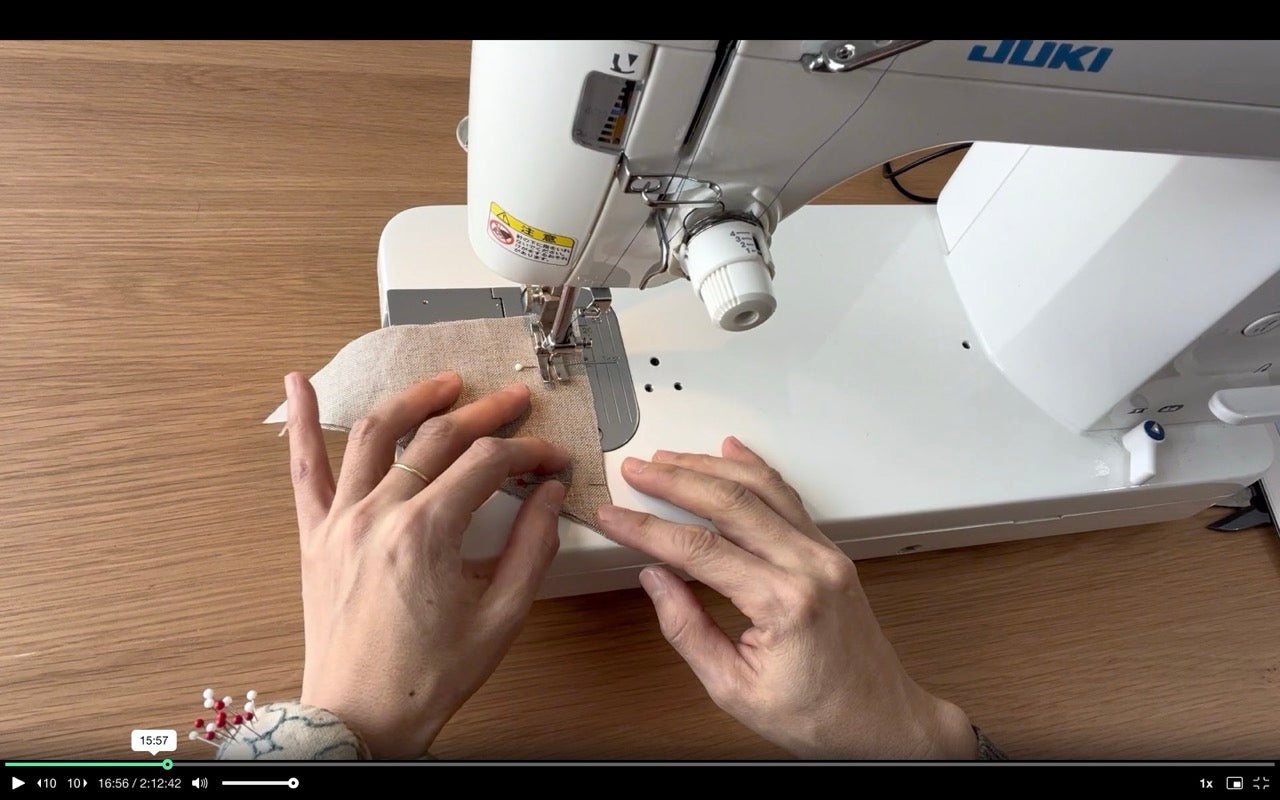
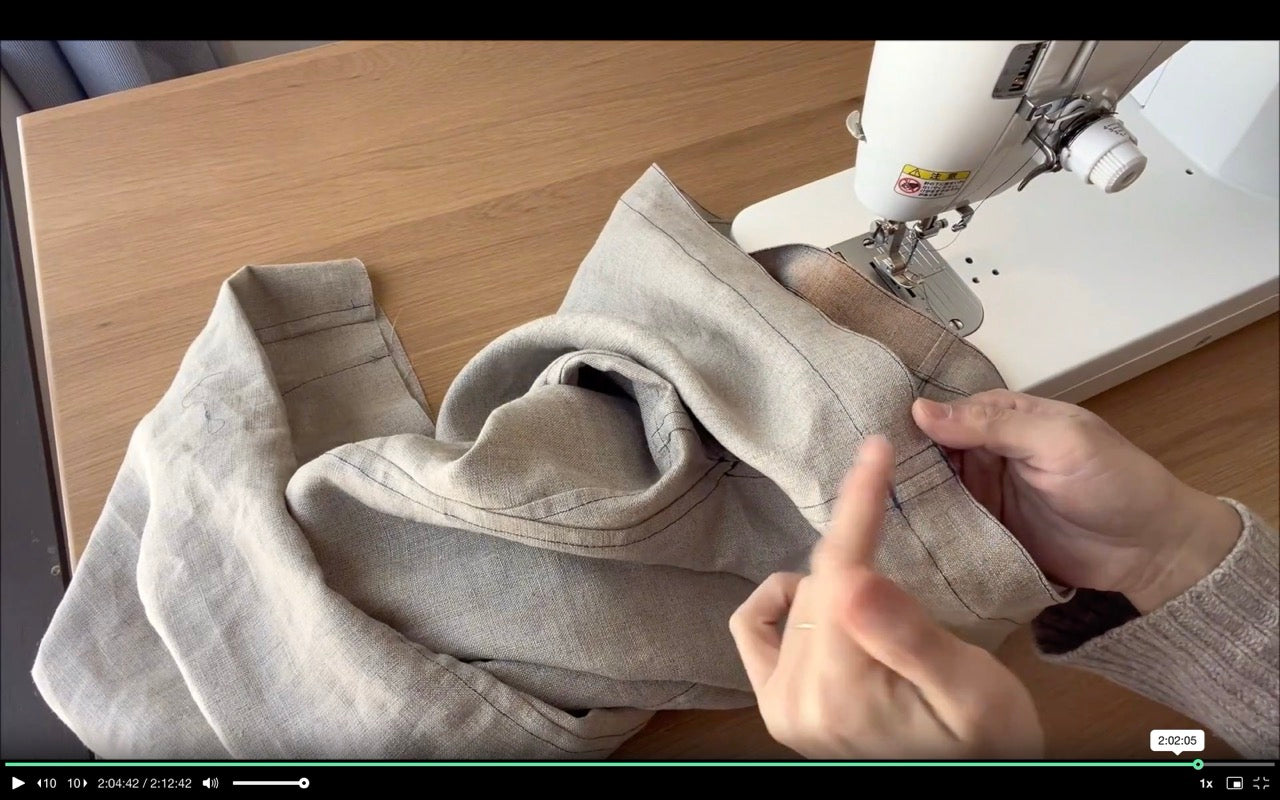
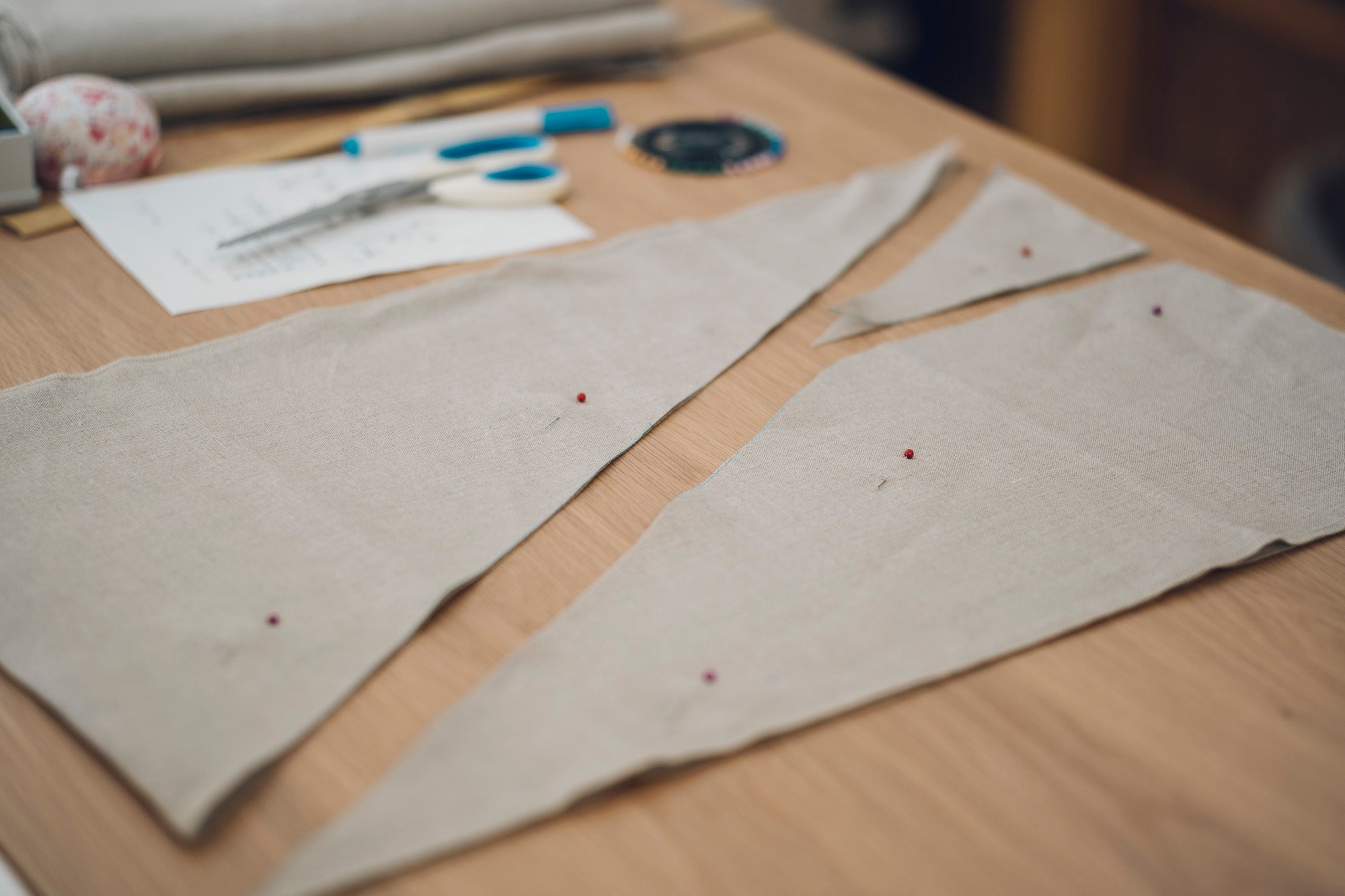
Video tutorial for making tatsuke
- We ship internationally via DHL. Shipping fees are automatically calculated at checkout based on your delivery address, so please confirm them there.
- If your order includes a pre-order item along with in-stock items, all items will be shipped together when the pre-order item becomes available.
- Customs duties and import taxes may apply depending on your country's regulations. These charges are the responsibility of the recipient.
- Orders are dispatched within 7 business days after payment is confirmed. We process shipments on Mondays and Thursdays.
Please feel free to contact us via the Itoshiro Yosehinten LINE Official Account.
[Video Course] How to Sew Tatsuke Using Flat-Felled Seams
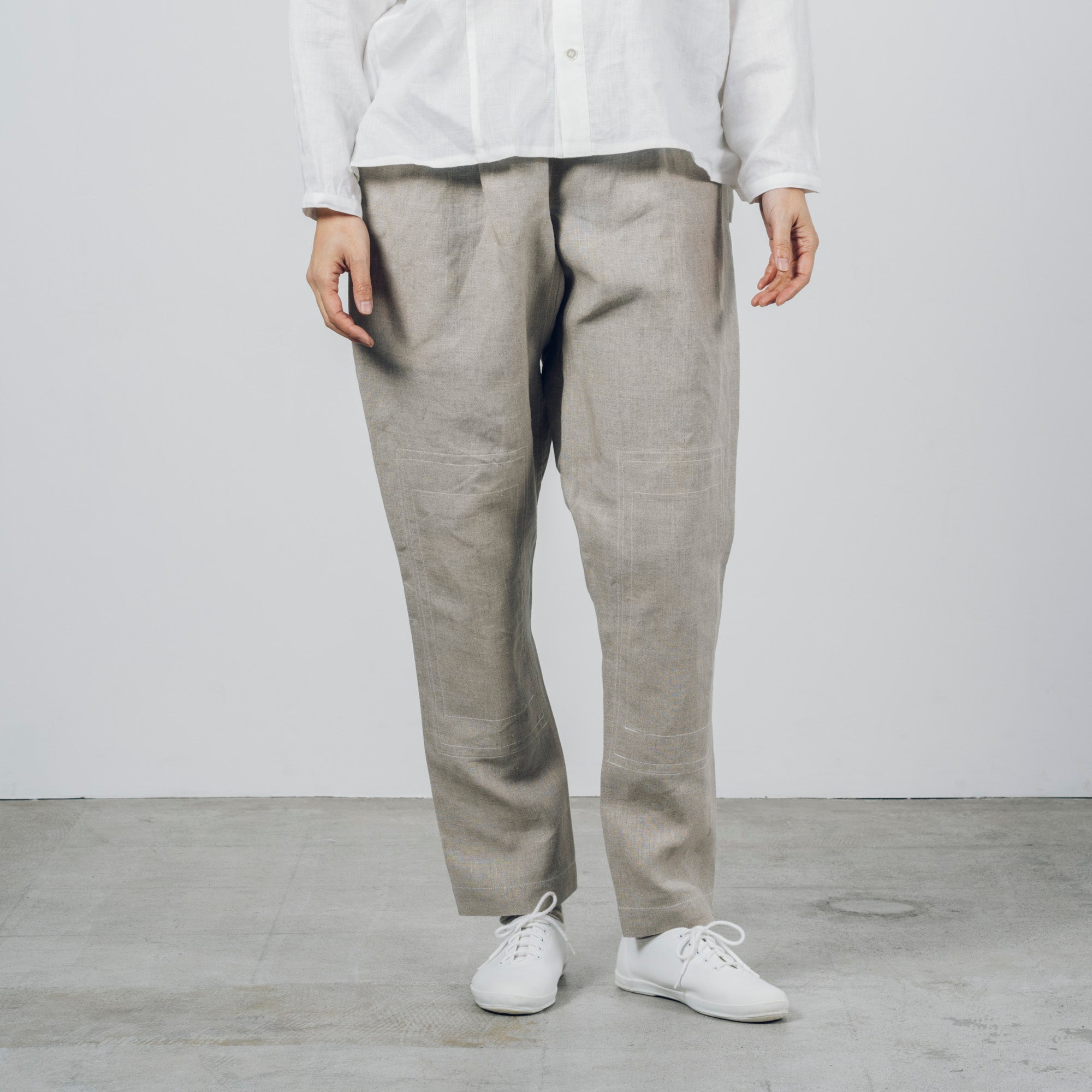
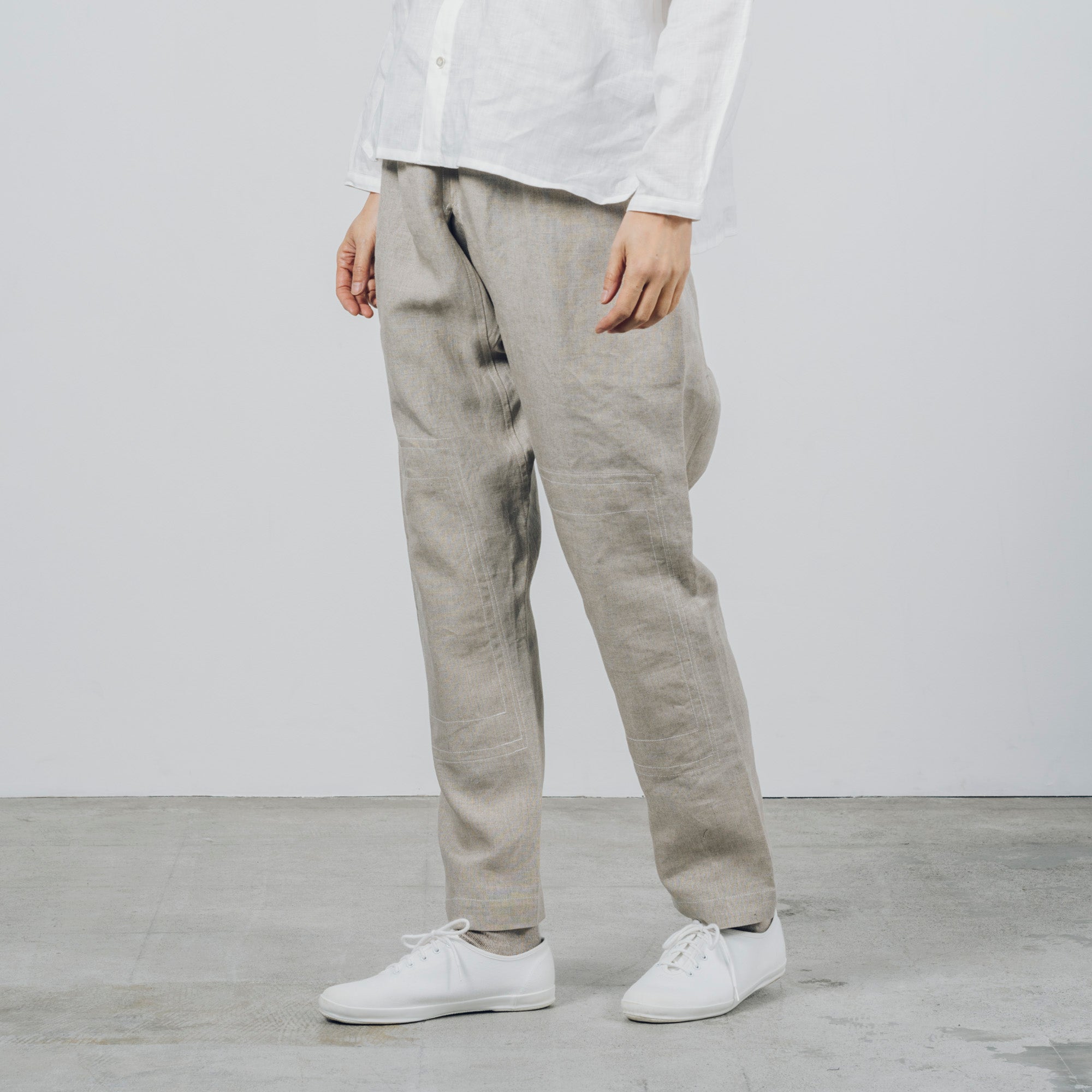
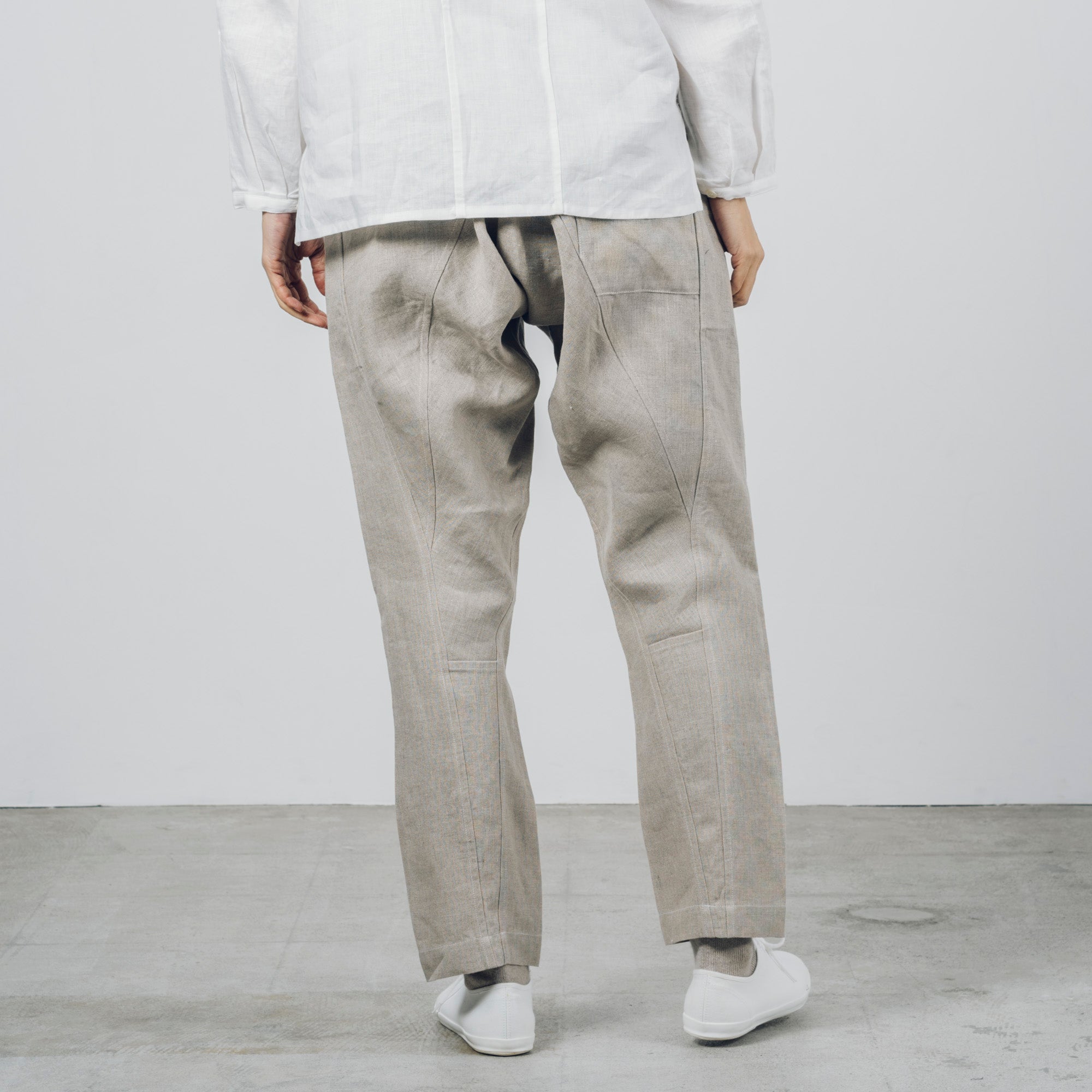
Tatsuke is a traditional workwear garment that has been passed down for generations in Itoishiro.
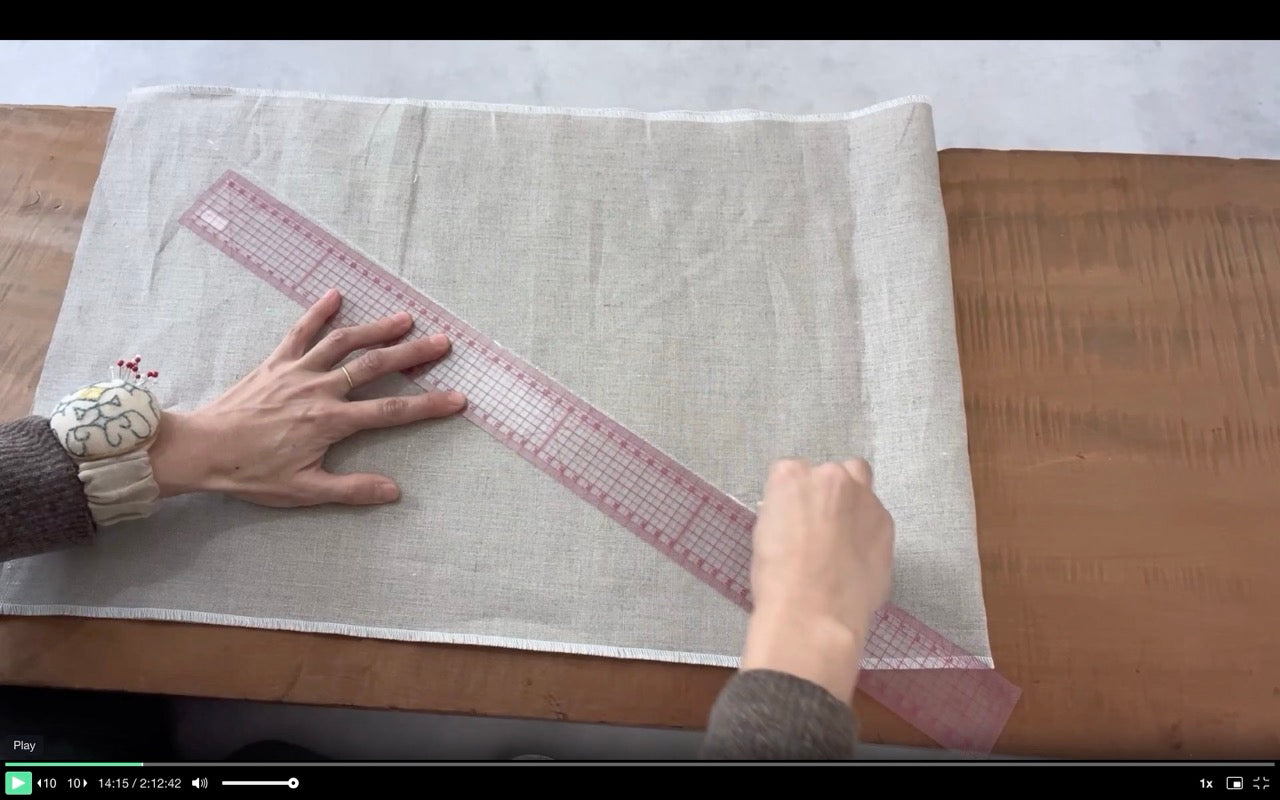
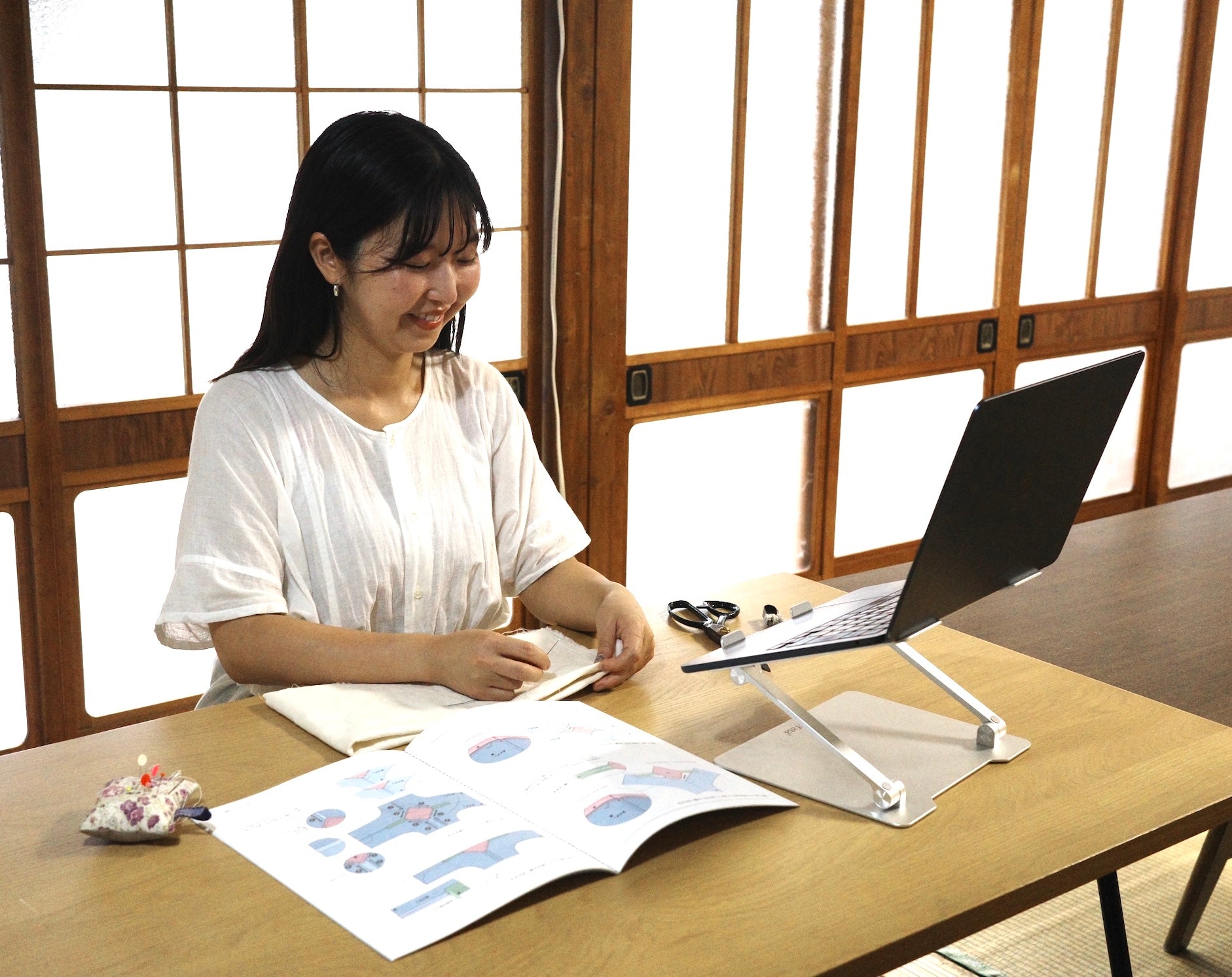
In this video, based on *How to Make Tatsuke*, you can watch almost every step from cutting to sewing. (We use a sewing machine here, but this also works for hand sewing.)
You can learn the hand movements, sewing order, and small tips that are hard to grasp just from a book, as if you were actually attending a workshop.
Enjoy taking time to tailor each garment at your own pace in the comfort of your home.
This video is recommended for the following people:
-
Anyone who tried following *How to Make Tatsuke* but found the steps hard to follow
-
Anyone who wants to attend a workshop but finds it hard to travel from a distance
-
Anyone who wants to work at their own pace, pausing and rewinding the video as needed
- Anyone who wants to try making it using fold-over stitching (1.5cm seam allowance) (The text uses a serger and 1cm seam allowance as the standard method)
What you'll learn in this video
This video covers almost every step of making a Tatsuke garment.
-
How to take measurements and calculate dimensions
-
Cutting fabric
-
Sewing each individual piece
-
How to adjust the side seams to match measurements
Please download this handy reference sheet to use the step-by-step timeline.
"We'll stop here for today."
"We'll continue again tomorrow."
We hope you'll enjoy taking your time making clothes bit by bit as part of your daily routine.
About this video
This video was created based on the content we actually teach in our in-person workshops.
This is not a beautifully edited short lesson video—we recorded every step without skipping as much as possible, so you can clearly see the hand movements and sewing order.
That's why we kept editing to the absolute minimum, prioritizing the cozy, in-person feel of working right alongside someone.
Feel free to pause and rewind as many times as you need to work through confusing parts at your own pace.
Total video runtime:
2 hours and 12 minutes
Watching options:
Both streaming and download are available
The file size is large (10G), so we recommend downloading it on a tablet or computer. You may have trouble playing it on a smartphone.
*For one month after purchase, you can stream and download the video. Please note that access will expire after one month.
Once you download and save it to your device, you can watch it again anytime you like.
How to get the digital text:
After purchasing the video, we'll send you a streaming and download link via email.
Feel free to print it out and use it as needed
Step-by-step timeline:
Please download and use this reference here.
Difficulty level
Tatsuke is the flagship garment of Ishidetsu White Goods Shop, but it is not a beginner-friendly project. Tatsuke actually has a very "clever" design, which brings with it a corresponding level of difficulty. While some beginners do take on the challenge, we recommend this for sewers who have already gained some experience.(If you are a beginner, we recommend starting by making a "Hakama". Please refer to this resource for details on clothing difficulty levels.)
It will take time to complete, but the joy of finishing your very own Tatsuke garment will be well worth it.
Please use this video alongside *How to Make Tatsuke*
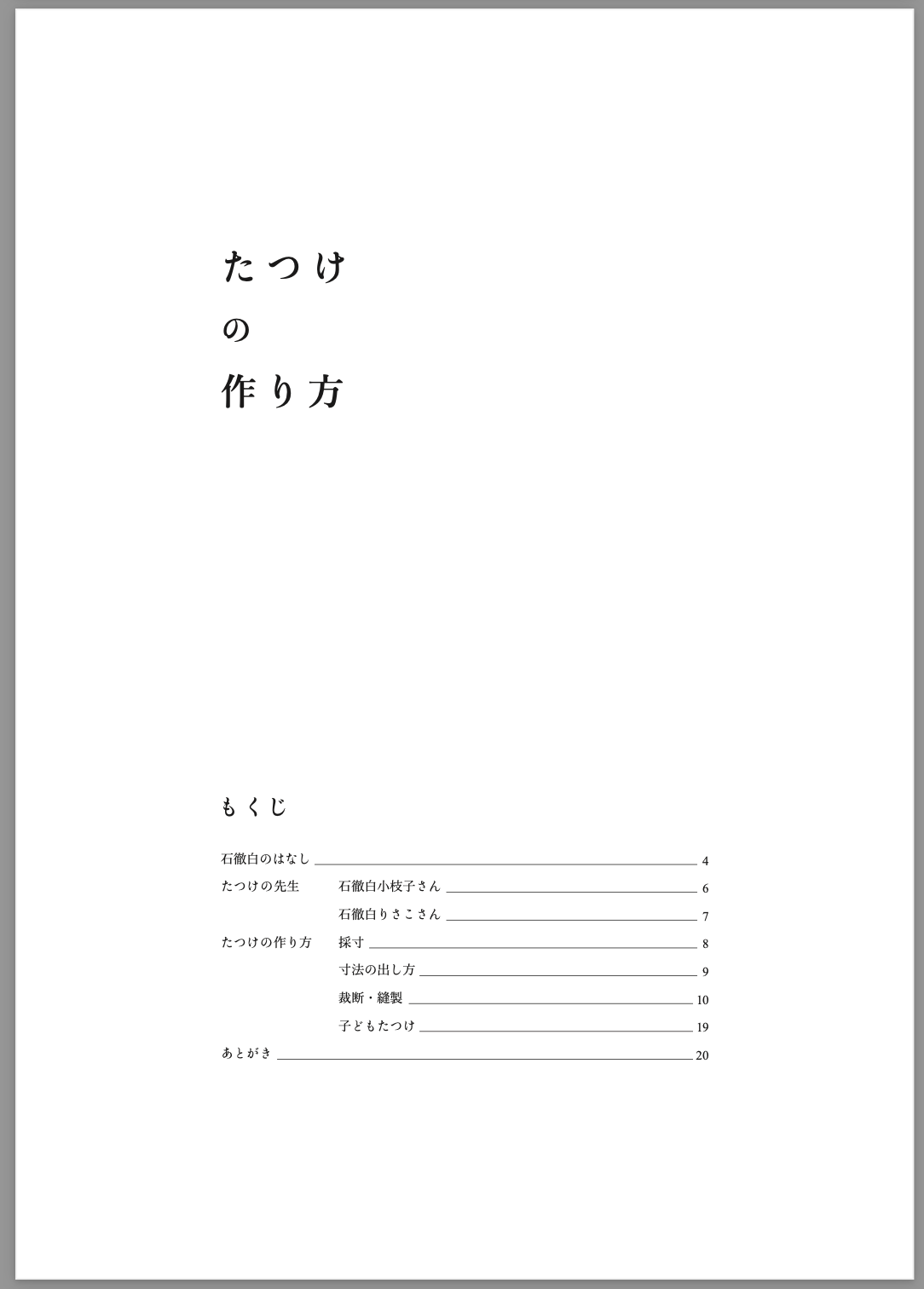
This video includes *How to Make Tatsuke* (4th Edition, Digital Version)

Use the book to confirm the overall process and measurements, while the video lets you see the actual hand movements and sewing order. Follow along with the video using the book's pages and chapter titles as references.
*Please note that there are differences between this edition and the 1st through 3rd editions of *How to Make Tatsuke*. The edition name is listed on page 22, so please check that.
*If you would like the print version of *How to Make Tatsuke*, you can purchase it as an add-on option.
About the video production
I do not intend to teach the "only correct way" to sew. As noted at the beginning of the text, "There is no single correct way to make Tatsuke."
Having learned the garment-making techniques passed down at Ishidetsu and having made Tatsuke for over 15 years, I am sharing the exact sewing machine method I use in my own work.
Additionally, this video was made with the priority of helping you actually make a complete Tatsuke garment, rather than pursuing perfection as a standalone video production.

There may be parts that are not perfectly polished or edited, but we hope this will serve as a humble, practical teaching tool that feels like working right alongside you in a workshop.
Fabric used
In our workshops, we use unbleached linen fabric. This fabric is woven in Shiga Prefecture, is extremely high-quality, and easy to sew with.
We cut it to 38cm width and overlocked the selvedges, so you can skip the cutting step. You can purchase this fabric as an add-on option, so please feel free to take advantage of it.

Workshops are also ongoing
Several times a year,we host a 2-night, 3-day workshop for making Tatsuke at IshidetsuWhile the video only covers the making process, at Ishidetsu we also offer visits to local shrines and explanations about vintage linen Tatsuke garments.
Additionally, all across the country,classes taught by certified Tatsuke Workshop Instructorsare being held. Please take advantage of these in-person learning opportunities as well.
Online Consultations
For anyone who wants to have a one-on-one consultation, we offer paid sessions here.
Please choose a date and time that works for you.
Finally
A Tatsuke garment is not something that can be completed in a single day.
I believe that the charm of this garment lies in the time spent slowly sewing it together, tailoring each piece with your own two hands.
We hope this video helps you enjoy the time spent making clothes in the comfort of your own home.
Choose options

失われつつあった
日本古来の服の知恵と心を学び
次の世代へつなげたい
縄文から続く山間集落・石徹白(いとしろ)で、
地域に伝わる衣服を復刻、リデザインしています
「直線裁断」布に無駄のない形
「藍染・草木染」この土地で育つ植物で染めています