





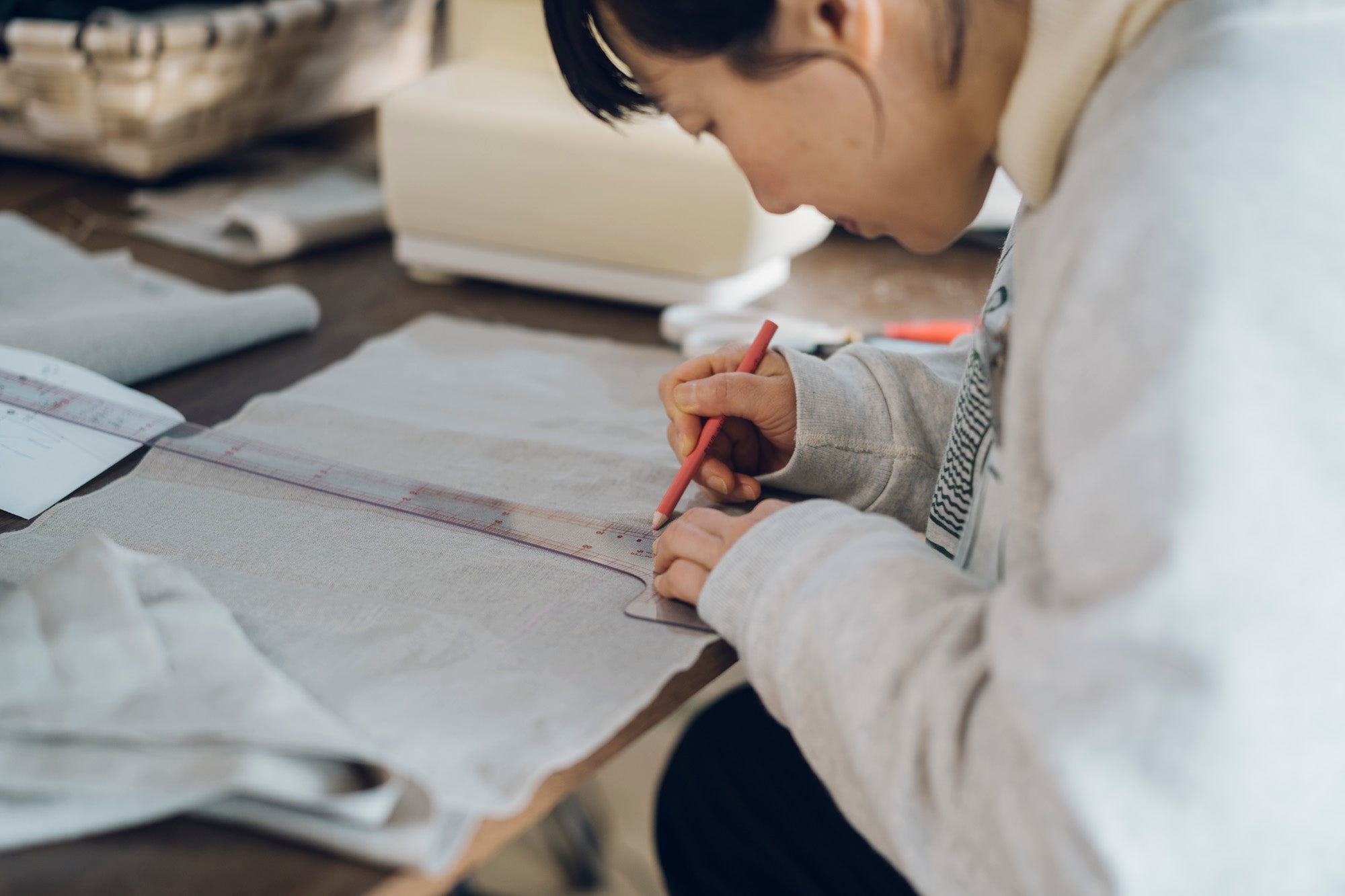


Tatsuke Hakama Making Workshop ~ A 2-night, 3-day clothing-making journey ~ (2027.2/6-8)
- We ship internationally via DHL. Shipping fees are automatically calculated at checkout based on your delivery address, so please confirm them there.
- If your order includes a pre-order item along with in-stock items, all items will be shipped together when the pre-order item becomes available.
- Customs duties and import taxes may apply depending on your country's regulations. These charges are the responsibility of the recipient.
- Orders are dispatched within 7 business days after payment is confirmed. We process shipments on Mondays and Thursdays.
Please feel free to contact us via the Itoshiro Yosehinten LINE Official Account.
~ Experience firsthand the culture and traditional artisanal crafts passed down through generations in Itoshiro ~
3-Day 2-Night Clothing-Making Trip
"Tatsuke Hakama Making Workshop"
Registration for the event taking place February 6-8, 2027 opens at 10:00 on November 1st!
Intended for: Beginners to experienced users
Difficulty: Tatsuke ★★★☆☆ / Hakama ★☆☆☆☆
Method: Hand sewing or machine stitching
There used to be clothing in Japan that was designed so no fabric went to waste.
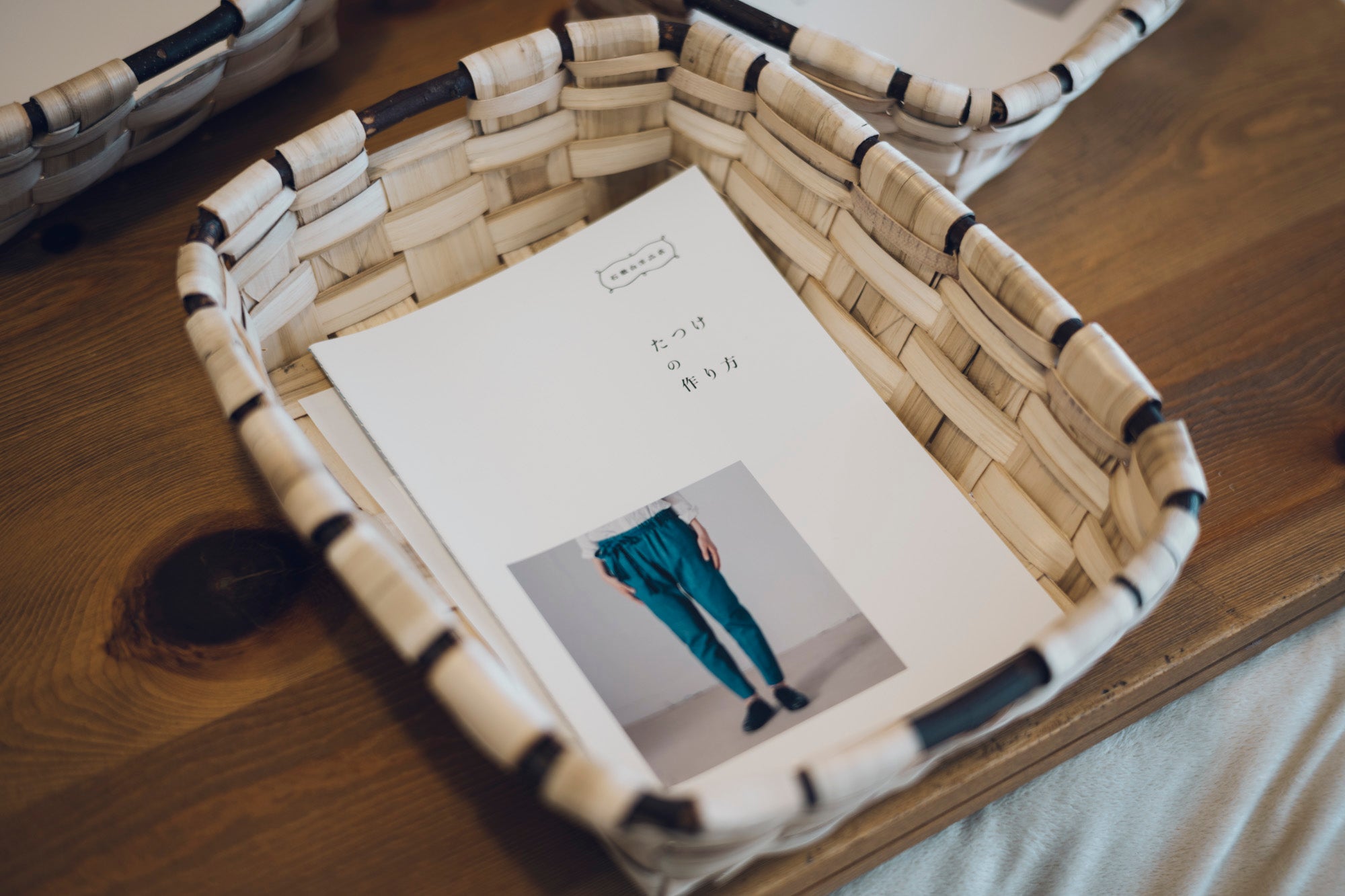
The Tatsuke and Hakama you will create in this course are,
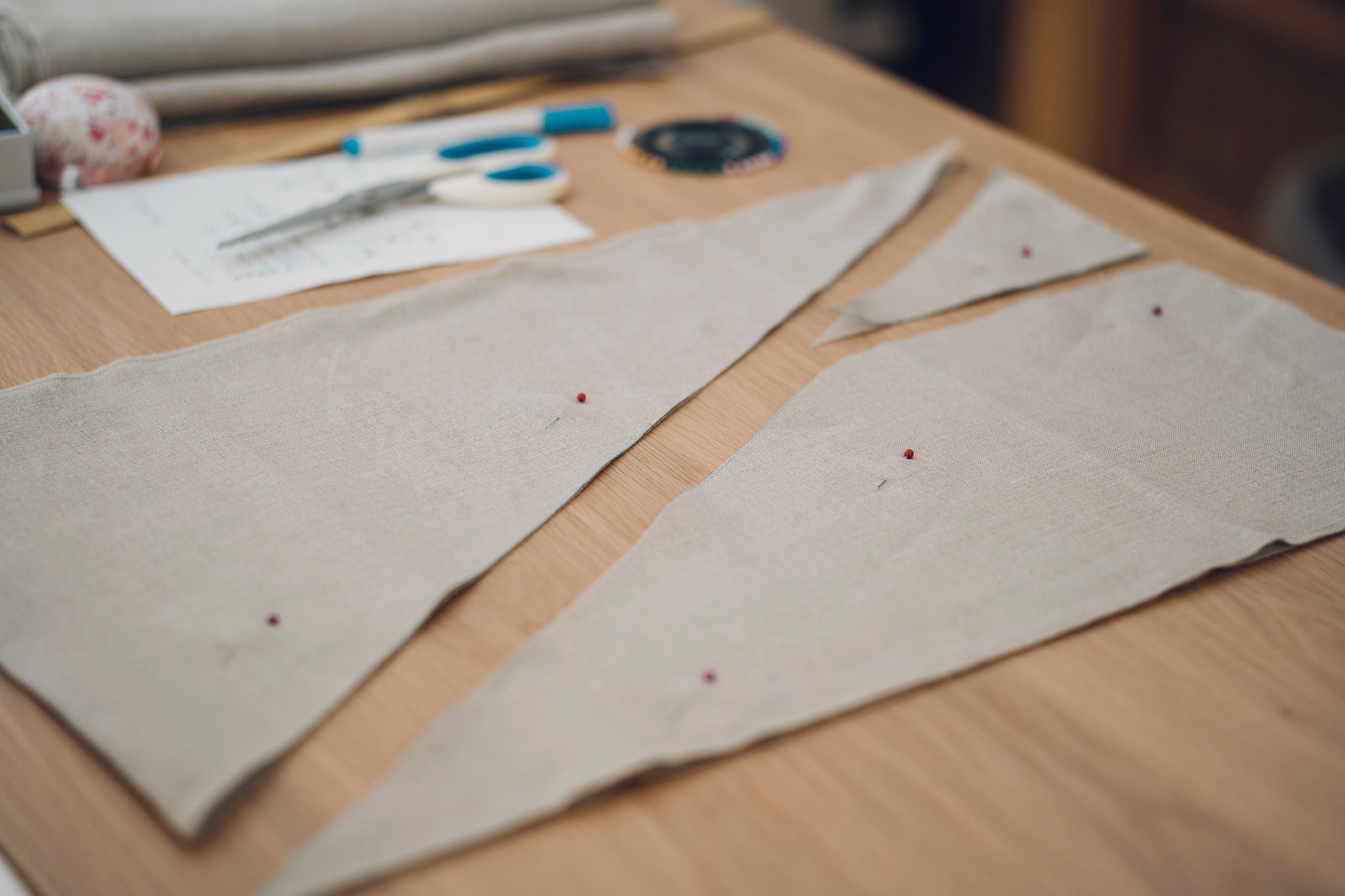
These are straight-cut trousers, a classic traditional design preserved from the Itoshiro region.
Uses almost no curved lines, with no excess fabric left unused,
Clothing that is easy to move in, durable, and designed to fit seamlessly into your everyday life.
It is something that the Japanese people have cultivated and built up over many long years
Guided by the ethos of treasuring fabric,
These garments have been crafted under the core philosophy of "clothing that works to help you live a better life."
From those who have actually made it,
It's amazing that none of the fabric goes to waste!
I can't believe people from long ago already came up with clothing this easy to move in!
Exclamations of surprise like this are very commonly heard.
In this course, we will share the slowly vanishing wisdom of traditional Japanese garment making,
Not through abstract 'knowledge', experience it firsthand directly with your own handsYou can do this.

Please select one of the options, and we will proceed to make one garment for you.
This 3-day experience is more than just "crafting" — you will get to connect directly to the foundational origins of Tatsuke
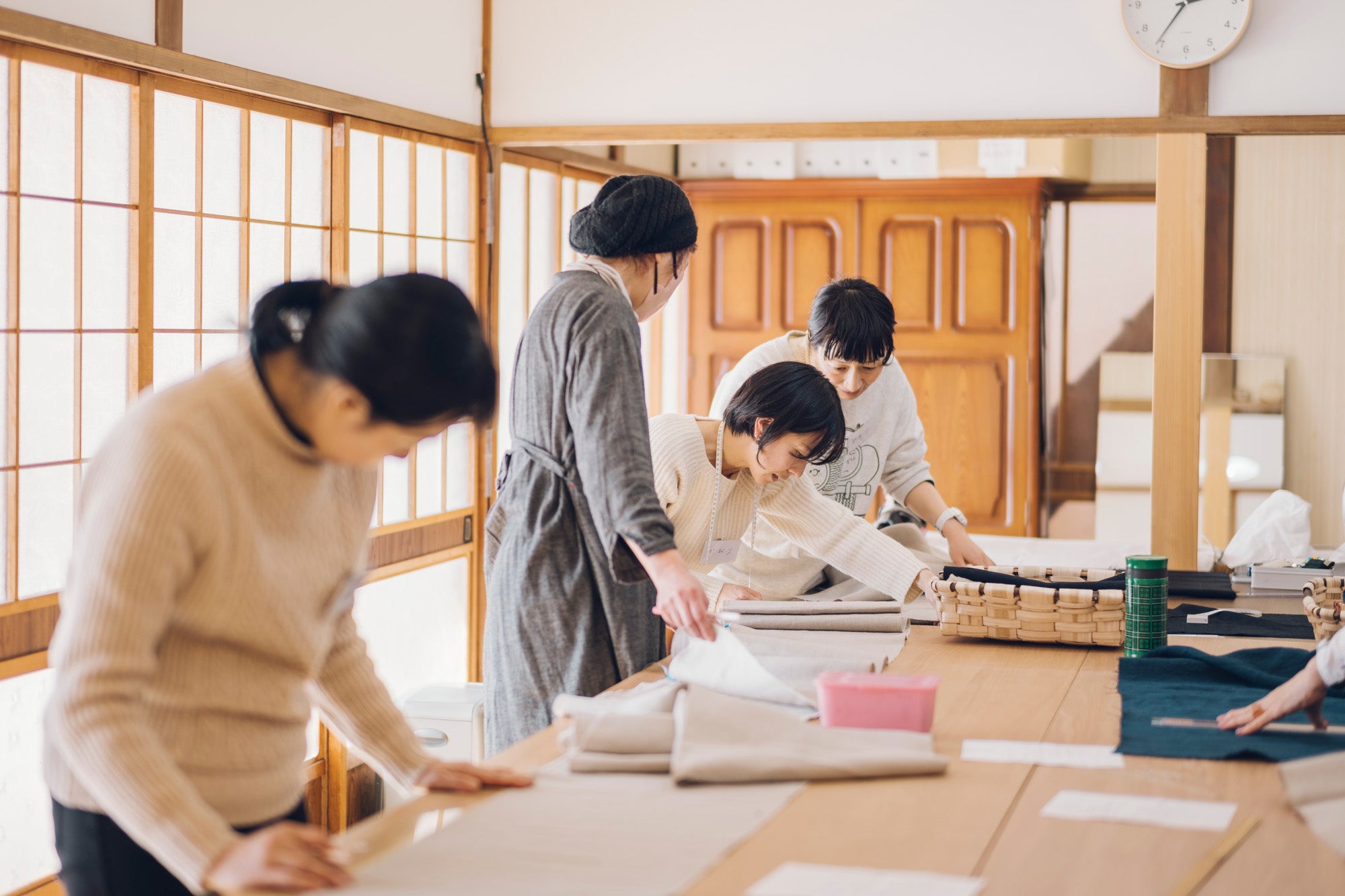
In this course, we will explore the clothing that has been worn as part of everyday life in Itoshiro for generations
You will tailor and finish your own Tatsuke and Hakama by hand.
But what you get here is
It's not just about finishing a single garment.
How to take measurements, cut the fabric, and sew,
How to wear it.
In addition, you will learn about the culture and daily life of Itoshiro, the region where Tatsuke was first developed
This is the on-site tasting experience you will get to enjoy.
Garment making that even complete beginners can fully finish all the way through from start to end
・Even if you have never made clothes before
・Even if you are not confident working with a sewing machine
- Even for those who have faced setbacks using their own self-taught, ad-hoc approach
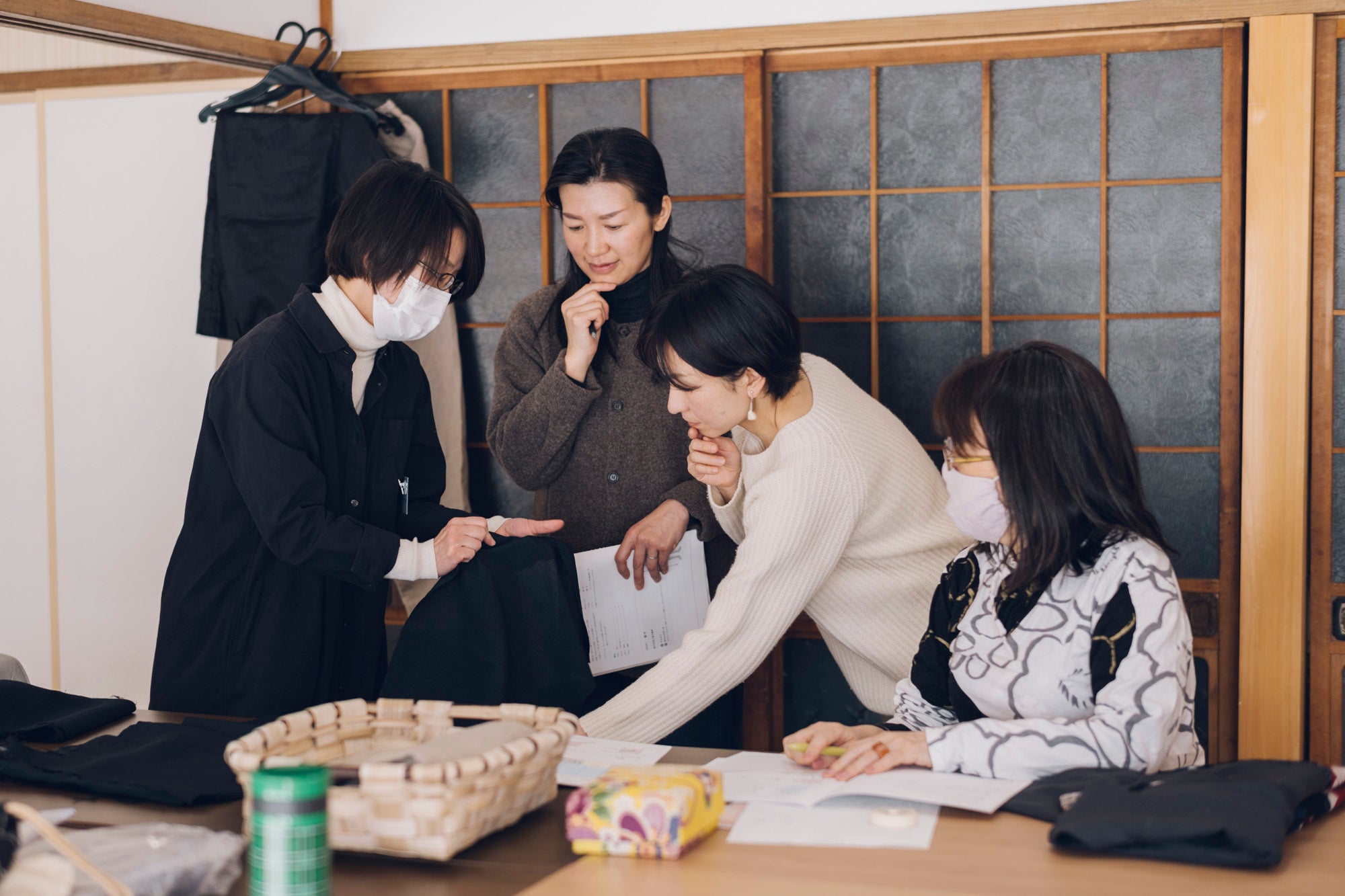
Because we work with a small team, carefully verifying each item one by one as we progress,
You will never end up feeling unable to keep pace as we wrap up.
By proceeding while understanding the reasoning behind the cutting and sewing techniques,
You will develop a practical 'way of thinking' that can also be applied to all your future clothing creation projects.
Develop a logical understanding of what clothing fits your body type
Tatsuke and hakama are,
These garments are designed first and foremost for ease of movement, with no tight, constricting fit against your body.
Why is it this shape?
Why these dimensions?
Why there is no waste
By crafting the finished offering while addressing these kinds of questions,
You will come to clearly understand what clothing that gently fits and conforms to your body truly means.
Time to approach garment making without separating it from everyday life.
At a place called Itoshiro,
Creating clothing while taking in the local atmosphere, too,
This is an important key element of this course.
In the everyday life of bygone days,
Clothing was not viewed as a "work of art", but rather as a practical tool for everyday life.
Cultivate the ability to craft your own practical, everyday life tools.
Gradually making that a normal, taken-for-granted standard going forward.
Learn from the repeated practices of those who came before,
I would like to share practical techniques and knowledge that you can put into immediate use.
Recommended for the following types of people
· For those looking to take their self-taught clothing making skills to the next level
・Anyone interested in the construction and design philosophy of historical clothing
・ For those who want to gain experience properly carrying a project all the way through to full completion.
・For those who want to learn while understanding the reasoning behind why things work the way they do
· For visitors who want to spend time on the land of Itoshiro, the birthplace of Tatsuke, even if it means traveling a long distance

We also offer special local dishes unique to this area.

Let's share the unique encounters and experiences that can only take place right here, right now.

■ Schedule
Saturday, February 6 – Monday, February 8, 2027
■ Schedule
* The time is scheduled so you can arrive even using public transportation.
〈Day 1〉
13:00 Start (Self-introductions)
14:00 Explanation, measurement taking, and dimension drafting
15:00 Cutting fabric, applying overlock stitching with a serger
17:00 End
18:00 Dinner social gathering
〈Day 2〉
9:00 Visit the shrine and the historical artifacts museum
10:00 Tickle Time
12:00 Lunch and store tour
13:00 Stitching Time
16:00 Talk about historical clothing culture
17:00 End. Head to your accommodation.
〈Day 3〉
9:00 Tick-Tock Time
12:00 Lunch & sharing time
13:00 End (bus departs at 13:19)
*Content is subject to change depending on weather and other circumstances.
■Belongings
Sewing tools (fabric shears, thread snips, measuring tape, chalk marker,Seam ripper, hand sewing needles, elastic threader, stationery ruler (approximately 15cm long),Sewing machine thread (50-weight cotton thread matched to your fabric, or 60-weight Schappe Spun thread: not required if you purchase fabric from our shop), straight sewing pins (20 count), pincushion, fabric (available for on-site purchase at a workshop discount: Unbleached fabric), Overnight Set (towels, toothbrushes, pajamas, etc.)。
※ Items provided on-site ※
JUKI sewing machines, overlock sewing machines ( White, Beige, Navy, Black), iron, ironing board, 50-60cm grid ruler, paperweight, task lamp, rubber, thread matched to locally sold fabrics, and other related items
■ Participation Fee
37,000Yen(Lunch is included. Separate details regarding accommodation fees will be sent to you via email. For a 2-night stay plus additional meal costs, the total will be approximately 17,000-21,000 yen.)
- The number of active lodging facilities in the village has declined, so we generally refer all visitors to Guesthouse KIITOS, which is operated by the Itoshiro General Store. Pre-arrival overnight stay・If you would like to arrange an extra overnight stay following your visit, please feel free to contact us to discuss options.
■ Venue & Access
Itoshiro Yohinten
65-18 Itoshiro, Shirotori Town, Gujo City, Gifu Prefecture
tel : 0575-86-3808
- Please use either a private car or public transportation as your means of travel.
-
If you are visiting by private car, a four-wheel drive vehicle and studless winter tires are required during the winter season (roughly December to March). Those who are not accustomed to driving on snowy roads are advised to use public transportation. If you have any concerns about road conditions, please feel free to contact us.
■ About Accommodation
We are pleased to offer bookings for the guesthouse "KIITOS", located directly across from the Itoshiro Western Goods Store workshop venue where we host our workshops (separate additional fee applies). As a standard policy, due to occupancy limits, accommodations are arranged as shared rooms (2 guests per room).
We will send you a detailed event guide and pre-event survey approximately one month before the scheduled event date. If you plan to stay at a different accommodation, or if you have a firm request for a private room, please let us know when we reach out at that time.
- If you are arriving via public transportation
・ Outbound (morning departure) Nagoya ⇒(JR)⇒ Mino-Ota 9:56 ⇒(Nagaragawa Railway) ⇒ 11:53
Mino Shiratori 12:20 ⇒(Itoshiro hoaxSand bath/ Shiratori Transportation)⇒ Shimozaisho 13:00
・ Return trip (daytime departure) Nishi Zaisho 13:19 ⇒(Itoshiro Demand Bus) ⇒ 14:00 Mino Shirotori 14:18 ⇒ (Nagaragawa Railway) ⇒ 16:37 Mino Ota 17:00 ⇒(JR)⇒ Nagoya
Participation Q&A
Q1. I'm a complete beginner at clothing making — am I still able to participate?
A. Yes, even beginners have participated in this in the past.
Because Tatsuke hakama are constructed entirely with straight-cut patterns,
Both the cutting and sewing processes use almost exclusively straight lines.
In this course,
• Guidelines for determining and specifying product dimensions
• Fabric handling instructions • Cutting method
・ Sewing order
- How to finish seam allowances
I will carefully explain each one individually, one by one.
Rather than "making it well"
We place great importance on the idea of "experiencing the philosophy behind Japanese garment making", so,
Please feel free to join regardless of your experience level — no prior experience is required.
Q2. I'm not very handy, so I'm worried I might not be able to finish putting this together all the way from start to finish.
A. Rest assured, we will provide full, dedicated support all the way through to completion.
We use a small-group class structure, and lessons proceed while closely monitoring each individual's learning pace.
If there is anything you do not understand, please feel free to ask as many times as you like right on the spot.
Also, this is not a course designed to aim for a perfect finished result.
We place great importance on working with our hands to craft one-of-a-kind pieces that are uniquely personal and true to your individual style.
Q3. I'm worried that I won't be able to keep up physically.
A. We will proceed at a reasonable, unrushed pace that avoids unnecessary strain.
This is a 3-day, 2-night itinerary, and we place great importance on maintaining a good balance between work hours and rest breaks.
You won't be stuck standing the whole time or have to keep sewing nonstop without breaks.
"Time for focused hands-on work" and "Time spent learning about local regional culture"
We'll make steady progress while taking occasional short breaks, such as pausing for tea, along the way.
Q4. What kinds of people participate in this event?
A. A diverse range of participants from all age groups and varied backgrounds take part.
Up until now
・ For anyone who loves making clothing (especially those who feel conflicted about ending up with leftover fabric scraps from their projects!)
・For those interested in Japanese daily life and culture
• For anyone who wants to spend time working with their hands out in nature
A wide range of attendees from all different backgrounds are participating, alongside many other groups.
Even between people meeting for the first time,
By sharing the time spent creating the same thing together,
This is an atmosphere where conversation naturally arises easily and organically.
Please look forward to joining us, and think of this as a great space to meet and make new friends!
Q5. Itoshiro is quite far away, is it okay to join even when participating alone?
A. Almost all participants join on their own, so this is completely fine.
Many attendees of this course travel from far away, and a large number of participants join the session on their own.
Please rest assured that we will also provide you with advance details regarding your accommodation and travel arrangements.
Nearly 100% of all attendees comment, "Even though it is quite a distance to travel here, it was absolutely worth coming."
We have set up our welcoming support structure to ensure your time with us leaves you feeling exactly that way.
Q6. What items do I need to bring?
A. We will provide all large sewing-related equipment such as sewing machines and irons required for sewing work.
Details of required items are listed at the top of this page, so please take a moment to review the information there.
If there are any items that are difficult for you to source or transport, we have those items readily available to provide for you from our side.
Please don't worry.
Q7. What kind of clothing will be completed?
A. You will sew one custom fitted piece, either a Tatsuke or Hakama, made to match your own body measurements.
"I'm interested in this, but I also have some concerns."
Please come visit Itoshiro, bringing all those heartfelt feelings with you.
This course is focused on more than just whether you can or cannot perform a given task,
Get hands-on, feel the product, and take it home with you.We deeply value it.
■Cancellation Policy
• Cancellations made after registration and up to 1 week before the event date: 5%
- Cancellations made 6 to 3 days prior to the event date: 50% charge
・Cancellations made after that cutoff: Full charge applies
■ Notes
- It gets cold in the mornings and evenings. Please bring warm outerwear with you.
• There are no convenience stores or supermarkets in the surrounding area. Please bring all essential items and snacks you will need for your 2-night, 3-day stay (we will provide some refreshments on site, but you are welcome to bring your own as well).
Choose options

失われつつあった
日本古来の服の知恵と心を学び
次の世代へつなげたい
縄文から続く山間集落・石徹白(いとしろ)で、
地域に伝わる衣服を復刻、リデザインしています
「直線裁断」布に無駄のない形
「藍染・草木染」この土地で育つ植物で染めています