
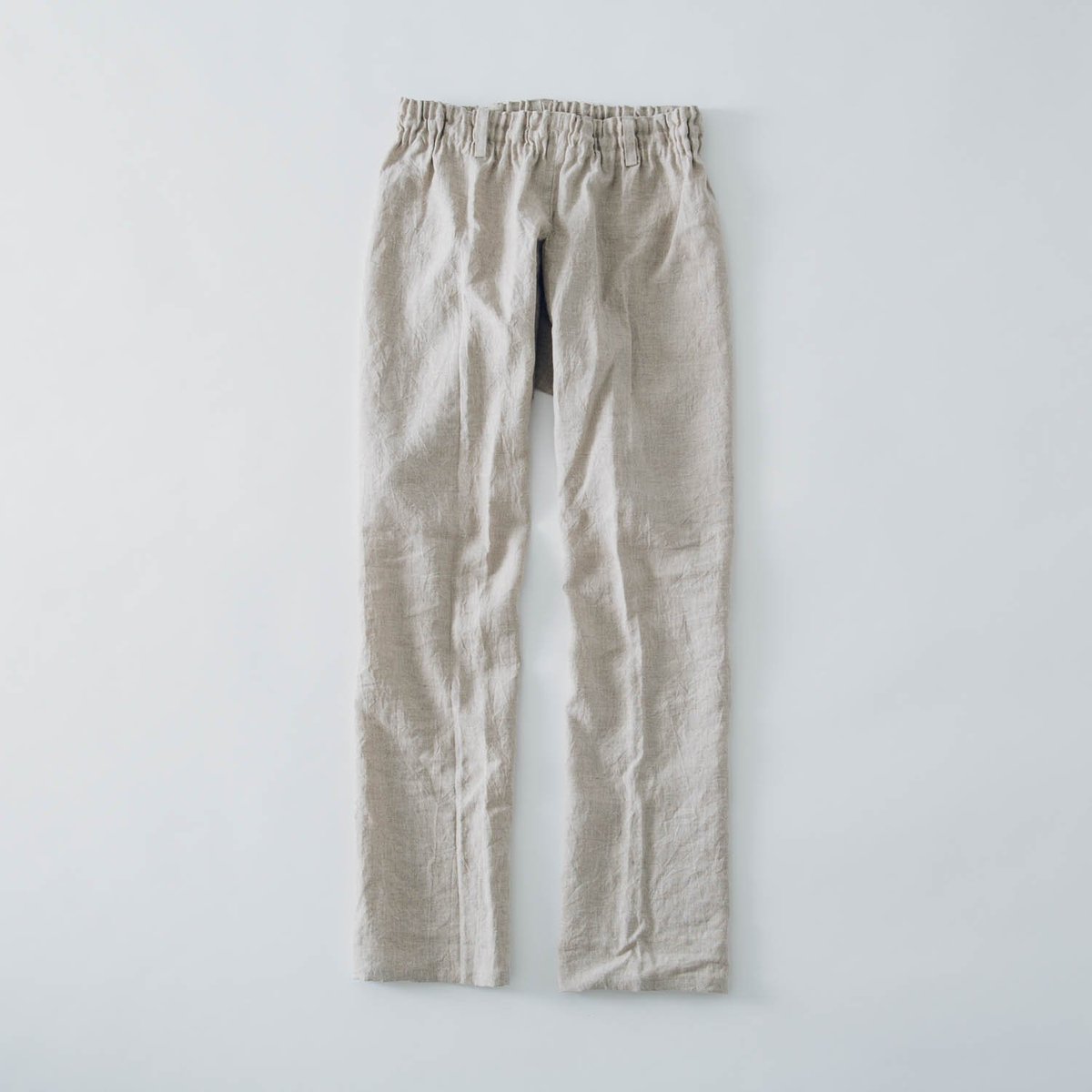



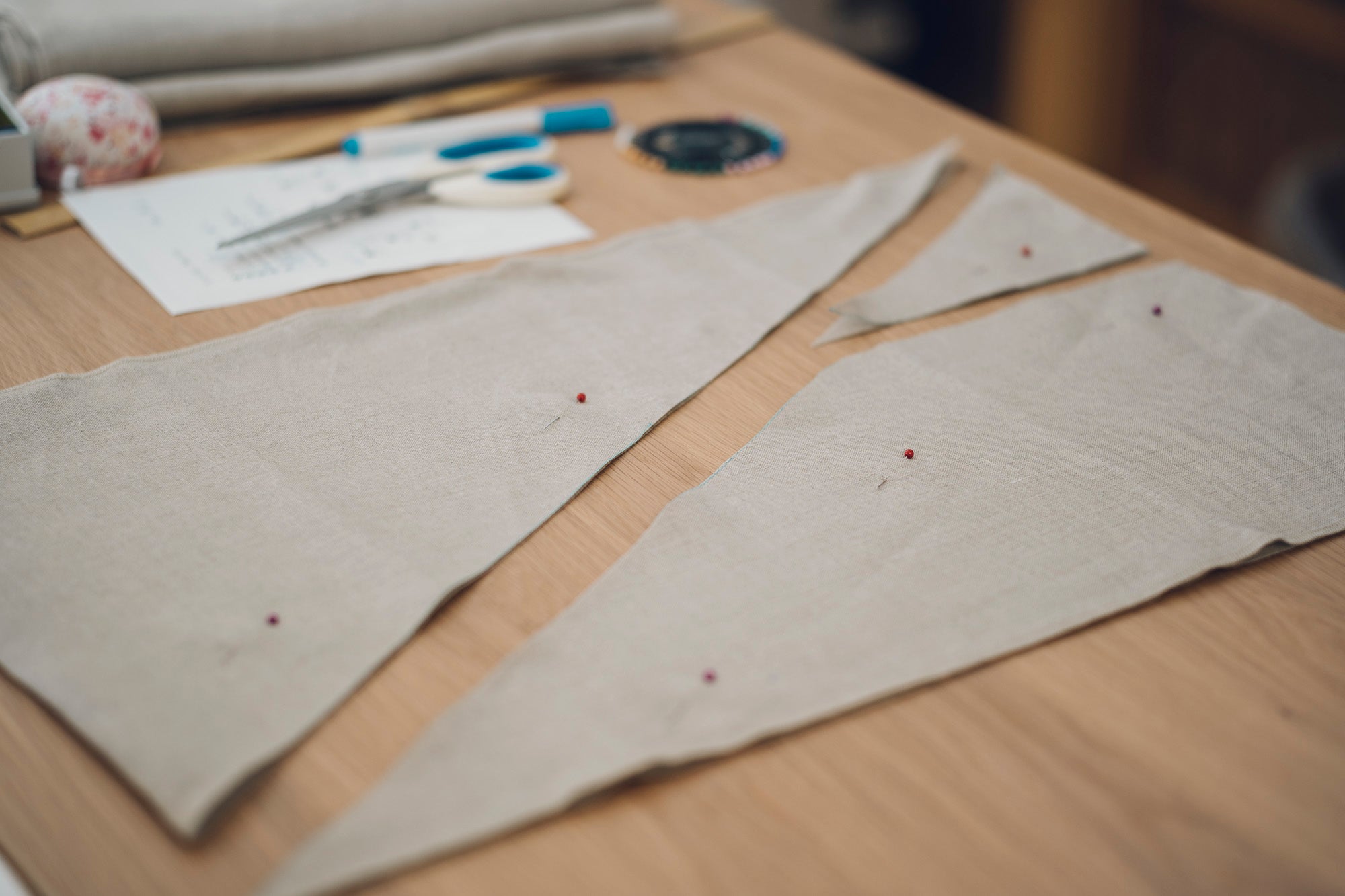


Tatsuke Workshop Instructor Certification Course ~ From 'Making Tatsuke' to 'Being Able to Teach' (September 12–14, 2026; December 12–14, 2026)
Please feel free to contact us via the Itoshiro Yosehinten Official LINE account.
Applications starting August 1st
Open to those who want to host a Tatsuke workshop
We will thoroughly teach you both how to make Tatsuke and how to teach it
Fellow certified instructors are waiting for you

‘If it’s this wonderful construction, I want to keep sharing it’
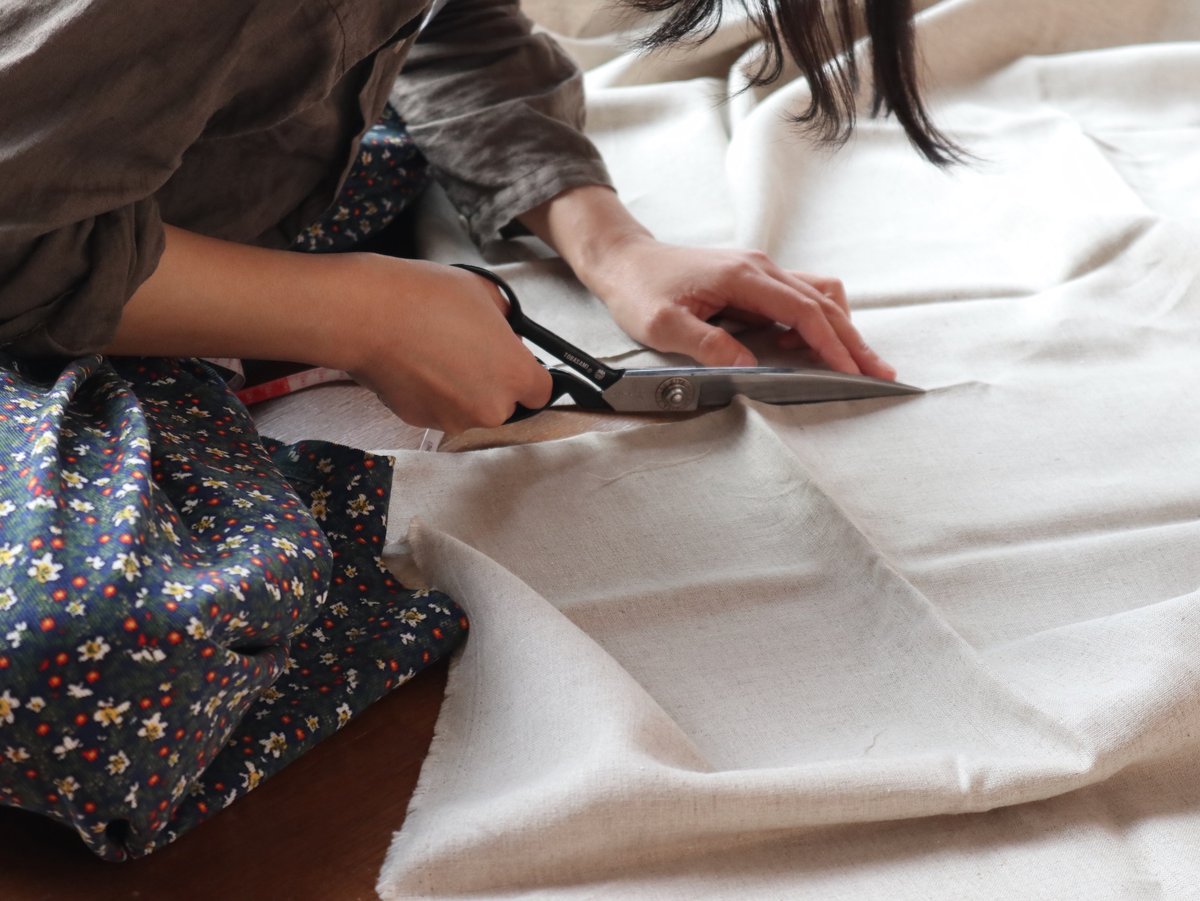
Straight cutting, no wasted fabric, clever construction, and the ancient wisdom of the Japanese people. Against the backdrop of a growing number of people who want to share this craft, we launched our workshop instructor training and certification program in 2023.
We will teach you how to share your knowledge
This course is not for learning how to make Tatsuke.
Why this particular shape?
Why is this step necessary?
Clothing that was born in daily life and passed down through generations,
Understand its structure and background, internalize it,
This is a course to turn that understanding into words and share it with others.
What you are personally convinced of,
you want to share it carefully and sincerely.
For those who hold this mindset,
the Tatsuke Workshop Instructor Certification Coursethis is.

This course is suitable for those who have the following mindsets:
-
Those who have made at least one Tatsuke piece,
and think ‘I’ve mastered how to make it,’and want to know what comes next. - Those who want to understand why this shape exists and why each step is necessary,
and put that understanding into their own words. - Those who, if they host a workshop,
want to share not just the steps, but also the background and philosophy behind them. - Those who want to be able to answer participants’ questions,
not just with personal experience, but with clear reasoning. - Those who want to share what you are personally convinced of,
carefully and sincerely with others.

What We Value in This Course
In this course, we value ‘what attitude to take and what to share’ more than just teaching techniques and steps.
1. Understand the Reasoning Behind the Shape
The shape and steps of Tatsuke carry the wisdom of local daily life cultivated over a long period of time. In this course, we won’t end with ‘this is how you do it’—we will think together about why this shape exists and why this step is necessary. By understanding the reasoning, Tatsuke becomes more than just a task; it becomes clothing you can share stories about.

2. Be Able to Explain It in Your Own Words
To become a certified instructor, you don’t need to memorize a set script. What you need is to be able to share what you have understood and are convinced of, in your own words, tailored to your audience. For this reason, the course values time to think and put your thoughts into words, just as much as time to make Tatsuke.
3. Share Sincerely
Workshops are spaces where people connect and share time. In this course, we value sharing with sincerity as much as accuracy. We believe that not pretending to know something you don’t, taking time to think, and being able to say ‘I don’t know’ if necessary builds trust in the learning space.
What You Will Learn in This Course
In this course, we will build on the premise that you can already make Tatsuke, and focus on developing the understanding and communication skills that come next.
- Learn to see Tatsuke’s structure not as a set of steps, but as a ‘meaningful shape’
- Be able to explain why these dimensions are used and why this stitching method is chosen
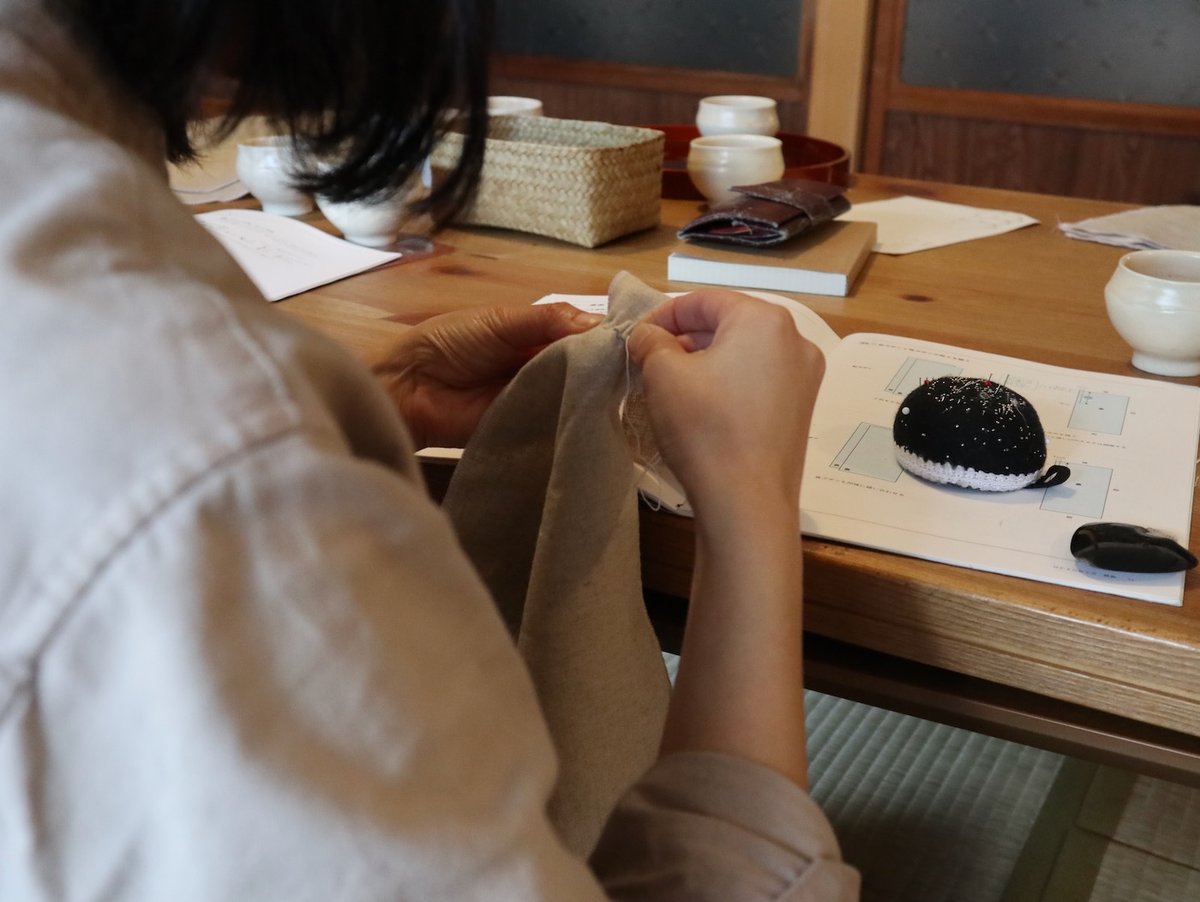
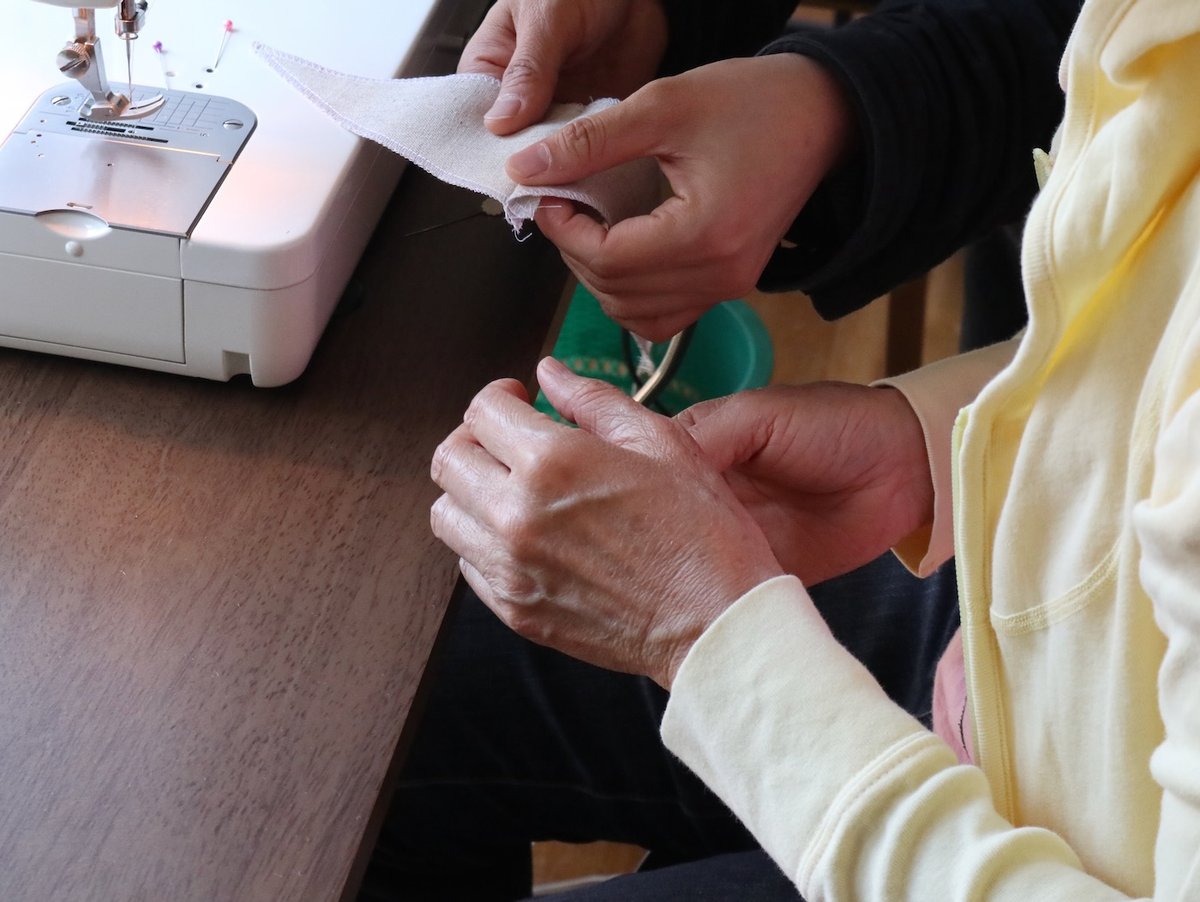
- Learn the unique features of hand sewing and machine sewing, and the differences in how to teach each
- Learn how to approach and think about common questions asked in workshops
- Learn to adjust your language to match participants’ level of understanding
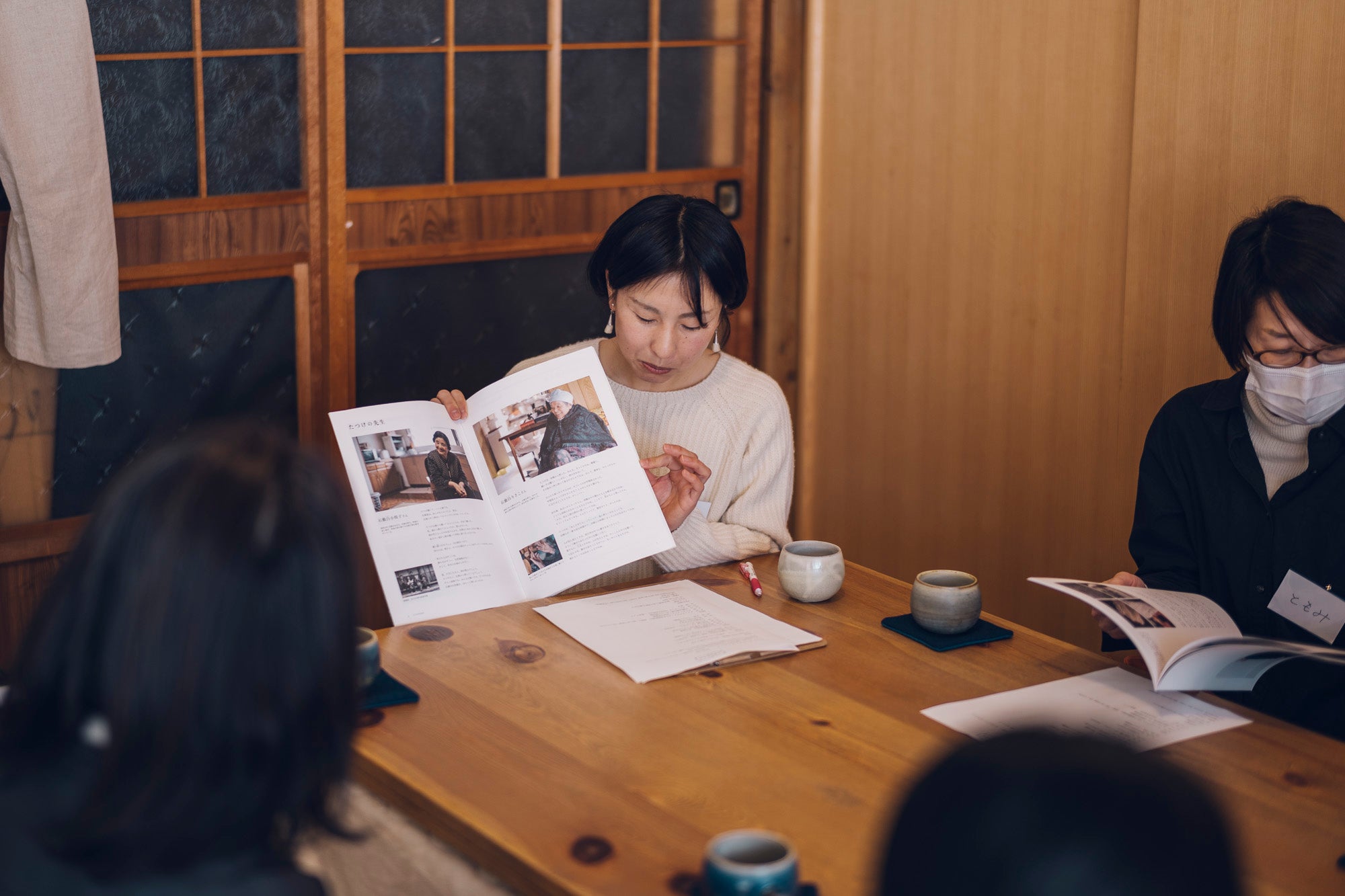
Learn to think while making, and turn your thoughts into words. By valuing this back-and-forth, you will internalize Tatsuke as ‘teachable knowledge’ that you can share with others. Additionally, we want you to learn about the Ishidoraishi region where Tatsuke was born.

Path to Instructor Certification
The course progresses step by step.
It is not designed to be completed in one go, but to build understanding over time.
-
Course Attendance
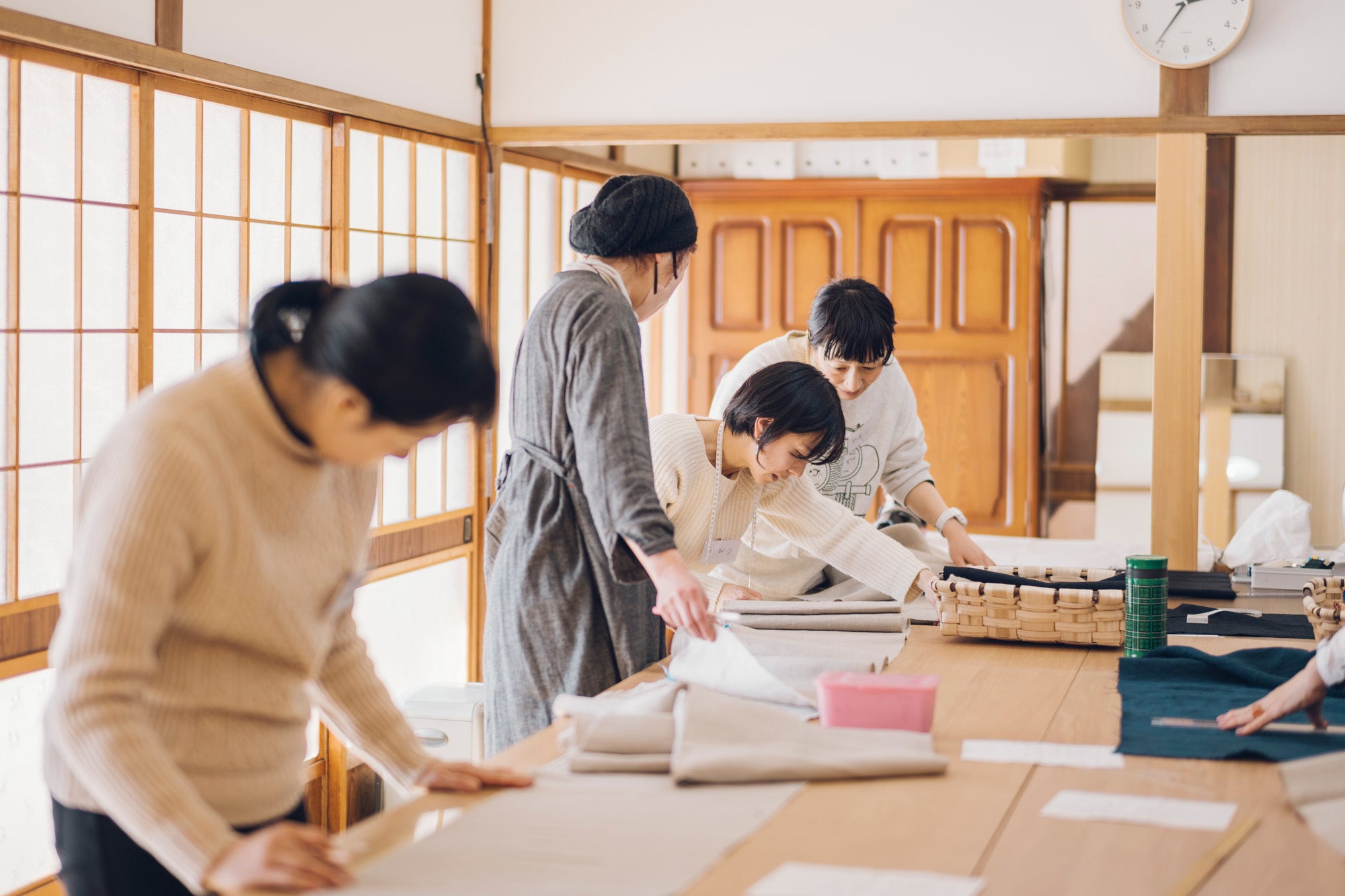
You will learn about the structure and background of Tatsuke, and the perspective needed to teach it. The content will also teach you about the Ishidoraishi region where Tatsuke was born. You will spend time thinking while actually making Tatsuke. -
Project Creation
Based on what you have learned, you will work on a project. You will make three Tatsuke pieces.
You will shape your own understanding into a finished project and submit it. -
Certification
Through the projects you submit,
we will certify those who are judged to be ready to understand and share Tatsuke as
‘Tatsuke Workshop Certified Instructors’. -
Certification for Other GarmentsCertification for other garments besides Tatsuke is only available to those who have become Tatsuke Workshop Certified Instructors. We will share detailed acquisition methods during the course.
Certification is not the goal, but the starting point for sharing Tatsuke. Let’s get started together as a community.
Those who become Tatsuke Certified Instructors can participate in the following:
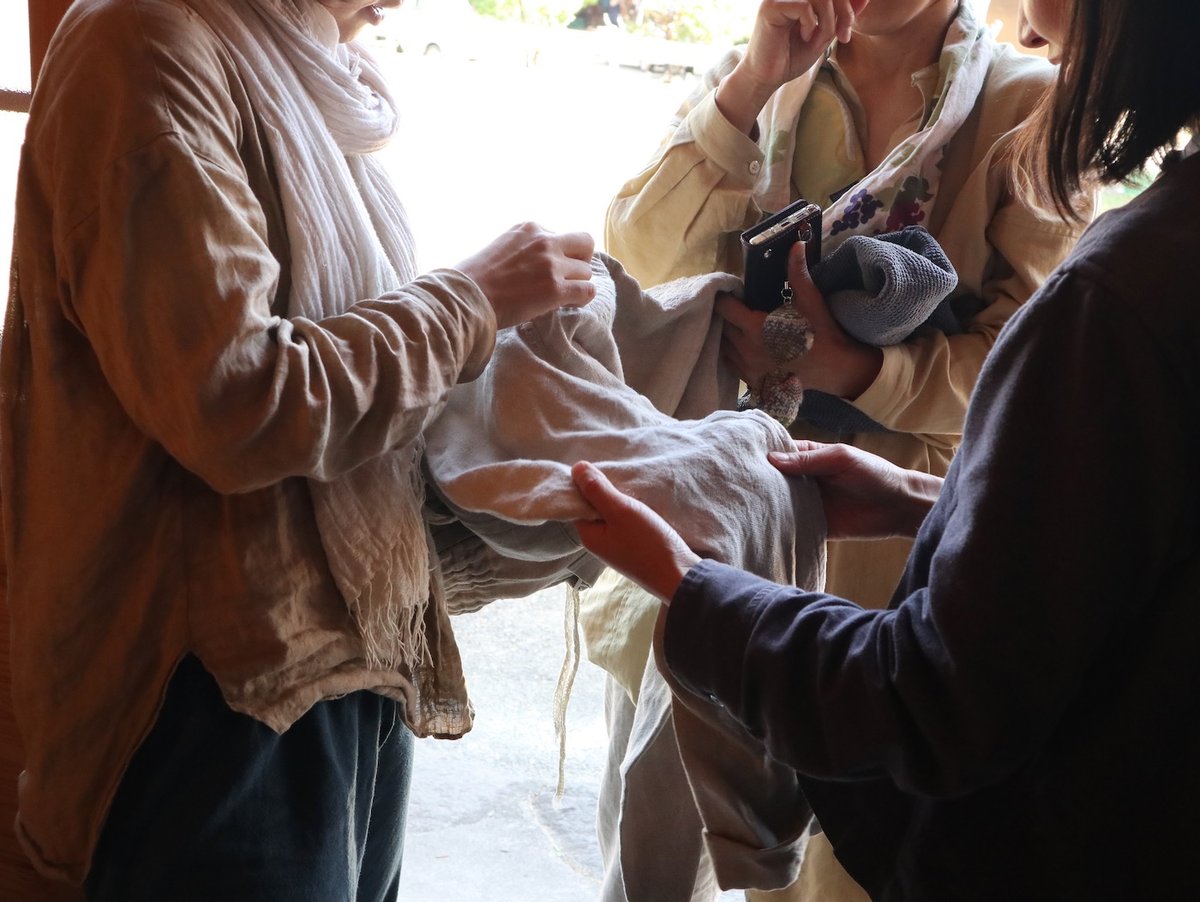
- Certified Instructor Gathering: We gather in Ishidoraishi once a year for consultation sessions on hosting workshops and events to enjoy Ishidoraishi throughout the seasons.
- Production Area Study Sessions: We provide opportunities to learn about thread and fabric as people who make crafts. These are learning spaces such as factory tours that are not usually accessible to the public.
- LINE Group: Join a space where you can consult with each other about making Tatsuke.
- Workshop Promotion Cooperation: As part of the various information broadcasts from Ishidoraishi Western Goods Store, we will assist with promoting workshops hosted by certified instructors.
Feedback from Past Participants
Those who have taken the course have shared the following feedback:
-
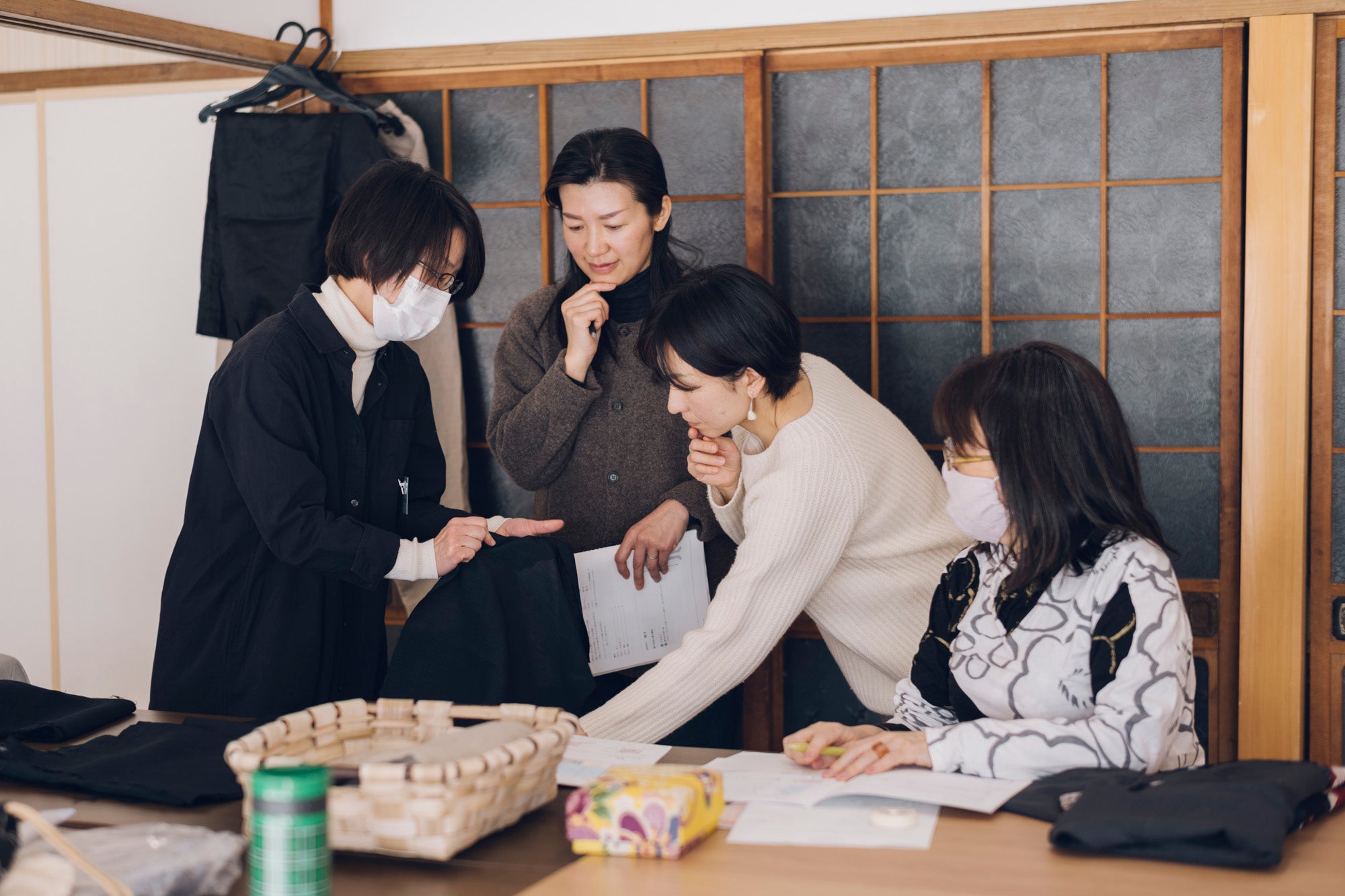
A group of people with the desire to become certified instructors gathered, and I was able to participate in a community united by learning Tatsuke. It was a very meaningful time.Making friends who can motivate and challenge each other has become a huge support for spreading Tatsuke.
-
There were parts I didn’t understand after just one workshop. This time, I was able to participate in the certification course and get detailed explanations, so I was able to fully understand it. Making Tatsuke is truly deep. I want to make more and more, and I’m growing to love it more and more.
-
It was the snowy season in Ishidoraishi, but I was healed by the scenery, and the other participants were friendly. We had fun chatting while making Tatsuke.
-
Of course, I learned the technical aspects of how to make and teach Tatsuke, but the hospitality of everyone during my stay, what I learned and saw about Ishidoraishi, and the meeting everyone I participated with—all of it was truly a wonderful time.
It is a characteristic of this course that many participants say it changed not just their skills, but also their way of thinking and attitude, and that they made great friends.
Schedule
• September 12 (Sat) – 14 (Mon), 2026: Applications closed
• December 12 (Sat) – 14 (Mon), 2026
Detailed Information for Participants
Schedule
* This schedule is set for those participating via public transportation.
13:30 Start (greetings, self-introductions)
14:00 Ishidoraishi History & Ishidoraishi Western Goods Store Introduction
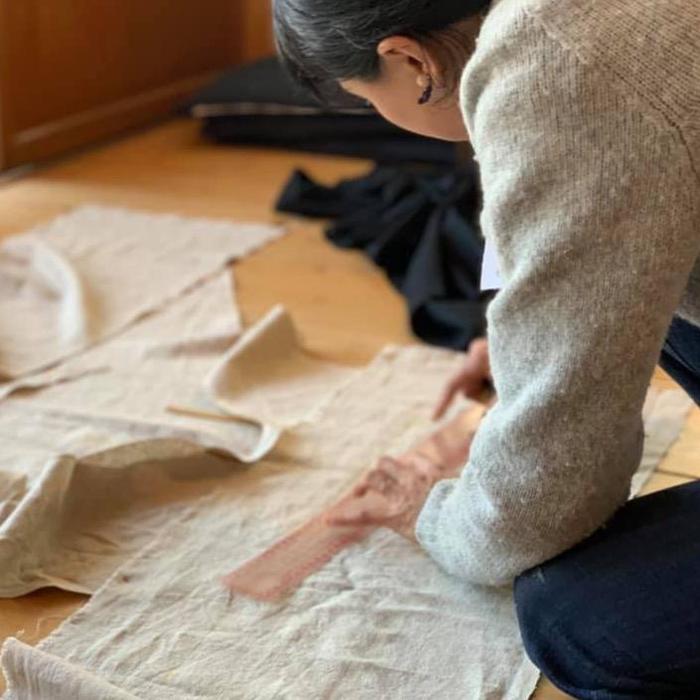
15:00 Measurements, Fabric Cutting / Overlock Stitching
18:00 Check into Accommodation & Dinner Social
9:00 Shrine Visit, Old Materials Museum Tour
10:00 Sewing Begins
12:00 Lunch, Store Tour, Explanation of Vintage Clothing
13:00 Sewing Resumes
17:00 End
18:00 Dinner
9:00 Explanation of Workshop Key Points and Projects, etc.
12:00 Lunch and Sharing Session
13:00 End (Bus departs at13:19departure)
- The schedule may be changed due to weather or other circumstances.
- Evenings are basically free time. Recommended ways to spend your time include visiting a local hot spring (Full Sky Hot Spring) and stargazing.
What to Bring
Sewing Tools (Fabric Scissors, Thread Snips, Tape Measure, Chalk Pen,Seam Ripper, Hand Sewing Needles, Threader, Plastic Ruler (approx. 15cm),Sewing Thread (Cotton Thread #50 or Schappe Span #60 matching your fabric: not required if you purchase fabric here), Safety Pins (20 pieces), Pin Cushion), Threader, Fabric (available for purchase at a workshop discount on site: Unbleached Cotton Fabric), Overnight Kit (Towel, Toothbrush, Pajamas, etc.)
* Items Provided On-Site *
JUKI Sewing Machine, Overlock Machine ( White, Beige, Navy, Black), Iron, Ironing Board, 50-60cm Grid Ruler, Paperweight, Task Light, Rubber Bands, Thread Matching Fabric Sold On-Site, etc.
Participation Fee
52,000 JPY (includes lunch for Day 2 and Day 3. Detailed information regarding accommodation fees will be sent separately via email. Two nights stay plus breakfast and dinner will cost approximately 17,000 JPY)
-
There are few accommodations operating within the village, so we basically recommend the guest house KIITOS operated by Ishidoraishi Western Goods Store. For early check-in or late check-out,please contact us for consultation.
Venue & Access
Itoshiro Yohinten
65-18 Ishidoraishi, Shiratori-cho, Gujo-city, Gifu Prefecture
tel: 0575-86-3808
- Please use either a private car or public transportation.
- If you are coming by private car, four-wheel drive and snow tires are required during winter (December to March). If you are not comfortable driving on snowy roads, please use public transportation. Please contact us if you have concerns about road conditions.
Accommodation
We recommend the guest house ‘KIITOS’ located directly across from the Ishidoraishi Western Goods Store Workshop Facility (separate fee). Due to limited availability, we will generally assign shared rooms (2 people per room).
We will send detailed information and a pre-event questionnaire approximately one month before the event. If you are staying at a different accommodation or specifically requesting a private room, please let us know at that time.
If Traveling to Ishidoraishi via Public Transportation
-
Outbound Trip (Morning Departure)
Nagoya ⇒ ( JR ) ⇒ Mino-Ota9:56 ⇒ (Nagara River Railway) ⇒ 11:53 Mino-Shiratori12:20 ⇒ (Ishidoraishi Demand Bus, Shiratori Kotsu)⇒ Shimozaisho (Shimozai Sho)13:00
-
Inbound Trip (Afternoon Departure) Nishi Zaisho13:19 ⇒(Ishidoraishi Demand Bus) ⇒ 14:00Mino-Shiratori14:18
⇒ (Nagara River Railway) ⇒ 16:37Mino-Ota17:00 ⇒(JR) ⇒ Nagoya17:58
If Traveling by Car
-
For Those Traveling from Tokyo, Nagoya, or Osaka
Approx. 1 hour 30 minutes from Meishin Expressway, Ichinomiya JCT (exit the expressway at Tokai-Hokuriku Expressway, Shiratori IC) -
For Those Traveling from Toyama or Takayama
Approx. 30 minutes from Tokai-Hokuriku Expressway, Takasu IC.
■Cancellation Policy
Cancellation between Application and 1 Week Before Event: 5% Fee
Cancellation 6–3 Days Before Event: 50% Fee
Cancellation After That: Full Fee
■ Important Notes
-
Temperatures can drop below zero in winter. Please bring cold-weather gear (you should also bring a jacket, as it can get cold during rainy season and early autumn).
-
Winter roads are snowyPlease wear snow boots or shoes suitable for winter use.
-
There are no convenience stores or supermarkets nearby. Please bring everything you need for your two-night, three-day stay, including snacks (we will provide some snacks as well).
Important Notes Before Applying
This course progresses while deepening your understanding.
Please review the following beforehand to ensure you can participate with peace of mind.
- This course is for those who have made Tatsuke at least once before.
It is not designed for those making Tatsuke for the first time. - While certification is the goal,
this is not a course to obtain a qualification in a short period of time. - During the course, along with hands-on work,
we value time to think and put your thoughts into words. - Because this course includes project submissions,
it is suitable for those who can set aside time to work at their own pace. - Due to the nature of the course, we cannot accept cancellations or refunds after the course starts.
Please understand this and submit your application.
If you have any concerns,
please feel free to contact us before submitting your application.
We value above all else that you participate only after you are fully satisfied.
Frequently Asked Questions (Q&A)
Q1. What level of experience do I need if I have made Tatsuke before?
You can participate if you have completed Tatsuke at least once before.
We value the desire to learn ‘why it works this way’ more than skill level.
Q2. Will I be teaching either machine sewing or hand sewing, or both?
The course covers both machine sewing and hand sewing.
In workshops, we will also teach you about the unique features of each method and how to teach them, so you can choose based on your participants and environment.
Q3. Can I participate even if I have no teaching experience?
Yes, you can.
This course is designed for those who want to start teaching, rather than those who already have teaching experience.
Q4. Do I have to host a workshop after certification?
No, you are not required to host a workshop.
Some participants join to deepen their own learning.
You can use what you learn at your own pace and in your own way.
Q5. Is there follow-up support after certification?
You can consult with us as needed even after certification.
We want to be able to work through questions and challenges that arise when actually hosting workshops together.
Q6. I am worried about the project. I am concerned that I won’t be able to do it properly.
The project is not evaluated solely on how finished it is.
We value how you thought and tried to understand the material.
If you have any questions, please feel free to consult with us.
Choose options

失われつつあった
日本古来の服の知恵と心を学び
次の世代へつなげたい
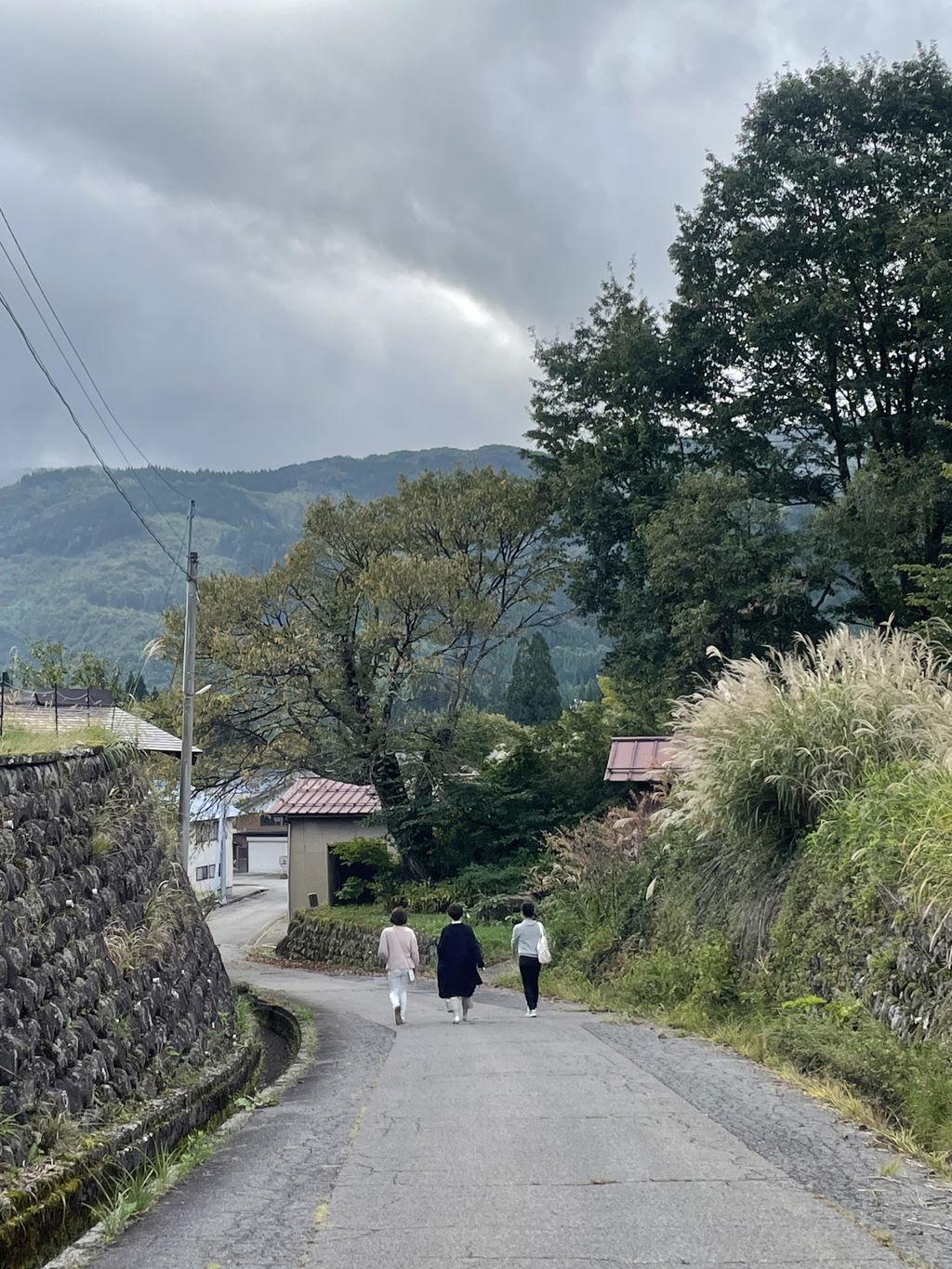
縄文から続く山間集落・石徹白(いとしろ)で、
地域に伝わる衣服を復刻、リデザインしています
「直線裁断」布に無駄のない形
「藍染・草木染」この土地で育つ植物で染めています